
First published on October 4th, 2010.
Dear young friends, the Lord is asking you to be prophets of this new age… —POPE BENEDICT XVI, Homily, World Youth Day, Sydney, Australia, July 20th, 2008
I wish to speak more about this ‘new age’ or era that is coming. But I want to pause for a moment and give thanks to God, our rock, and our refuge. For in His mercy, knowing the frailty of human nature, He has given us a tangible rock to stand on, His Church. The promised Spirit continues to lead and reveal the deeper truths of that deposit of faith that He entrusted to the Apostles, and which continues to be transmitted today through their successors. We are not abandoned! We are not left to find the truth on our own. The Lord speaks, and He speaks clearly through His Church, even when she is scarred and wounded.
Indeed, the Lord GOD does nothing without revealing his plan to his servants, the prophets. The lion roars——who will not be afraid! The Lord God speaks——who will not prophesy! (Amos 3:8)
THE AGE OF FAITH
As I meditated on this coming new era that the Church Fathers speak of, the words of St. Paul came to mind:
So faith, hope, love remain, these three; but the greatest of these is love (1 Cor 13:13).
After the fall of Adam and Eve, there began an Age of Faith. This might seem strange to say at first since the proclamation that we are “saved by grace through faith” (Eph 2:8) would not come until the mission of the Messiah. But from the time of the fall up until Christ’s first coming, the Father kept inviting His people into a covenant relationship of faith through obedience, as was spoken by the prophet Habbakuk:
…the just man, because of his faith, shall live. (Habb 2:4)
At the same time, He was demonstrating the futility of human works, such as animal sacrifice and other aspects of the Hebraic law. 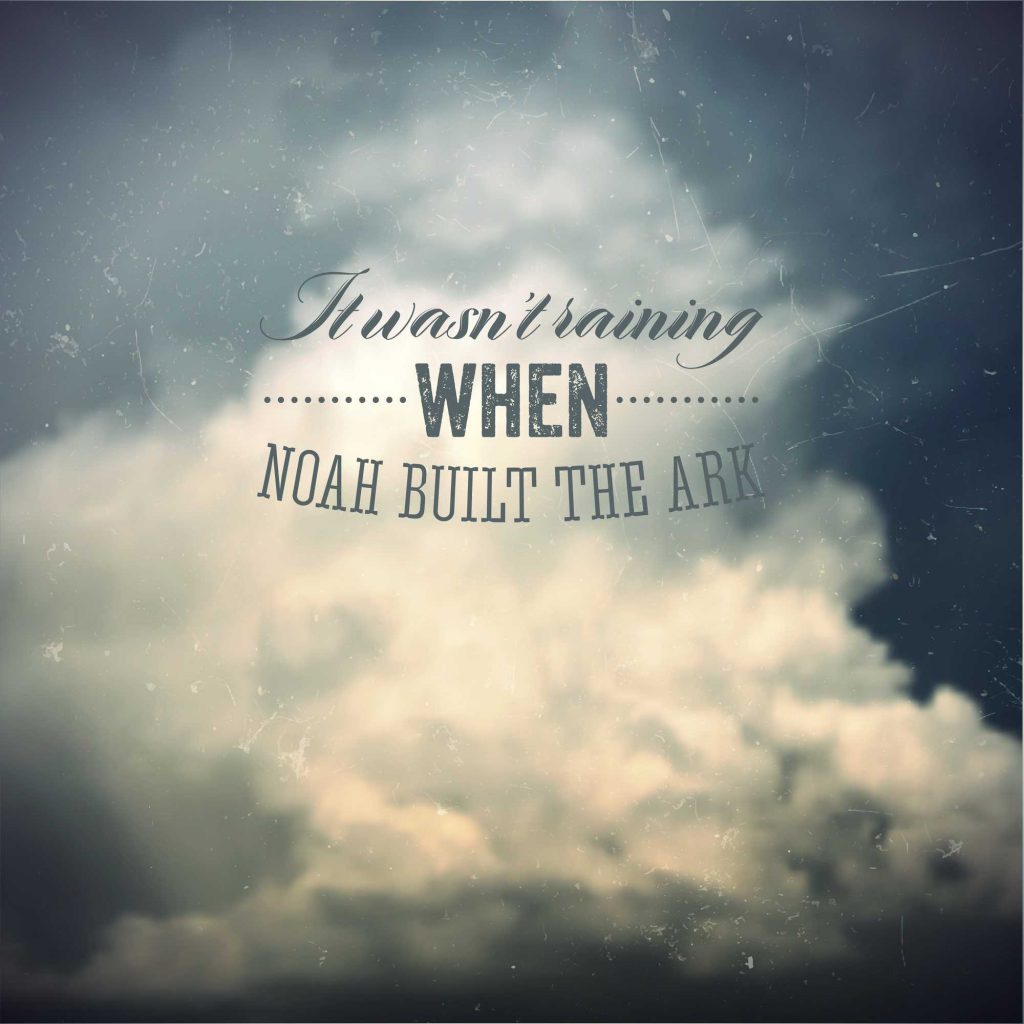 What really mattered to God was their faith—the basis of restoring relationship with Him.
Faith is the realization of what is hoped for and evidence of things not seen… But without faith it is impossible to please him… By faith Noah, warned about what was not yet seen, with reverence built an ark for the salvation of his household. Through this he condemned the world and inherited the righteousness that comes through faith. (Heb 11:1, 6-7)
St. Paul goes on, in the entire eleventh chapter of Hebrews, to explain how the righteousness of Abraham, Jacob, Joseph, Moses, Gideon, David, etc. was accredited to them because of their faith.
Yet all these, though approved because of their faith, did not receive what had been promised. God had foreseen something better for us, so that without us they should not be made perfect. (Heb 11:39-40)
The Age of Faith, then, was an anticipation or seed of the next age, the Age of Hope.
THE AGE OF HOPE
The “something better” that awaited them was the spiritual rebirth of humanity, the coming of God’s kingdom within the heart of man.
To fulfill the Father’s will, Christ ushered in the Kingdom of heaven on earth. The Church “is the Reign of Christ already present in mystery.” —Catechism of the Catholic Church, 763
But it would come at a price since the law of sin had already been set in motion:
For the wages of sin is death… for creation was made subject to futility… in hope that creation itself would be set free from slavery to corruption (Rom 6:23; 8:20-21).
God, in the supreme act of love, paid the wages Himself. But Jesus consumed death upon the Cross! What appeared to conquer Him 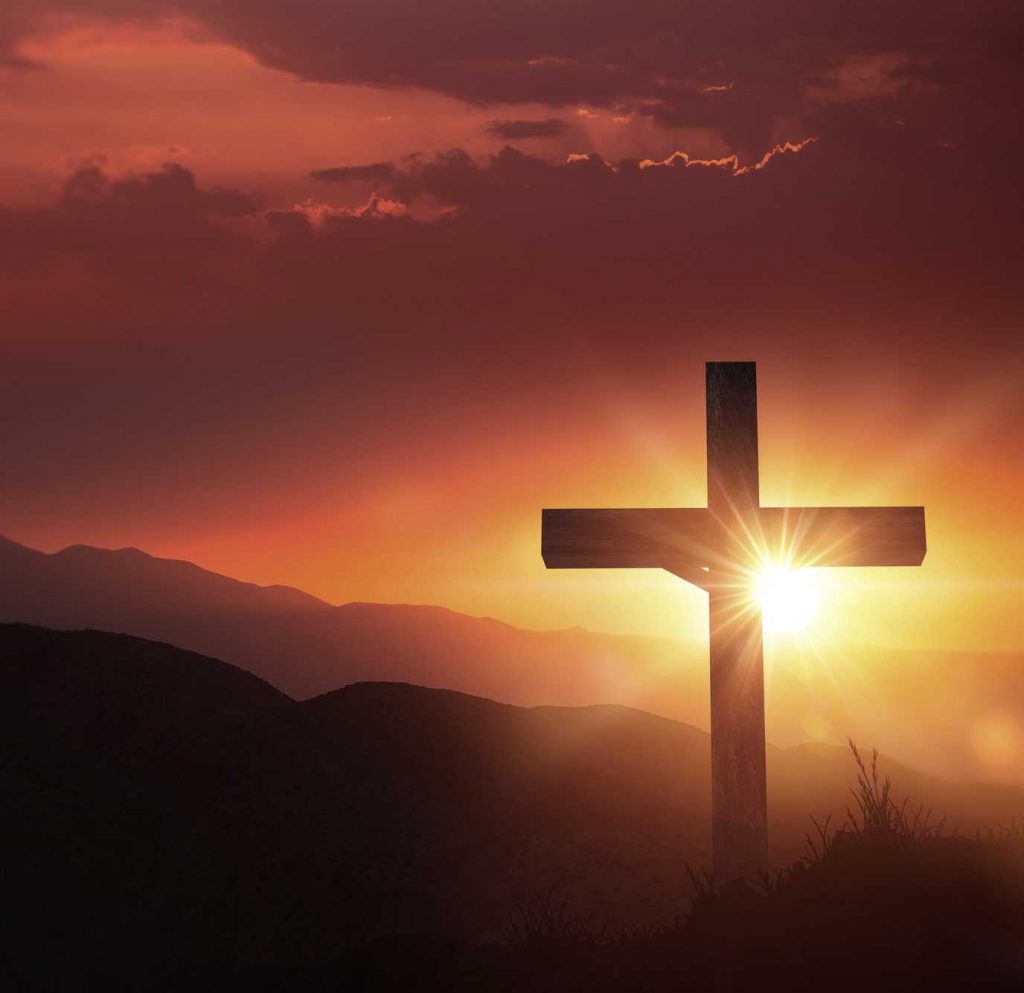 was itself swallowed up in the mouth of the tomb. He did what Moses and Abraham and David could not do: He rose from the dead, thus conquering death by death through His spotless Sacrifice. Upon His Resurrection, Jesus redirected death’s deadly currents from the gates of Hell toward the gates of Heaven. The new hope was this: that what man had permitted by his free will—death—had now become a new path to God through the Passion of Our Lord.
The ominous darkness of that hour signaled the end of the “first act” of creation, convulsed by sin. It seemed like the victory of death, the triumph of evil. Instead, while the tomb lay in cold silence, the plan of salvation was reaching its fulfilment, and the “new creation” was about to begin. —POPE JOHN PAUL II, Urbi et Orbi Message, Easter Sunday, April 15th, 2001
Even though we are now a “new creation” in Christ, it is as though this new creation has been conceived rather than fully formed and born forth. New life is now possible through the Cross, but it remains for mankind to receive this gift by faith and thus conceive this new life. The “womb” is the baptismal font; the “seed” is His Word; and our fiat, our yes in faith, is the “egg” waiting to be fertilized. The New Life that comes forth within us is Christ Himself:
Do you not realize that Jesus Christ is in you? (2 Cor 13:5)
And thus we rightly say with St. Paul: “For in hope we were saved” (Rom 8:24). We say “hope” because, even though we have been redeemed, we are not yet perfected. We cannot say with certainty that “it is no longer I who live, but Christ who lives in me” (Gal 2:20). This new life is contained in “earthen vessels” of human weakness. We still struggle against the “old man” that tugs and pulls us back toward the chasm of death and resists becoming a new creation.
…you should put away the old self of your former way of life, corrupted through deceitful desires, and be renewed in the spirit of your minds, and put on the new self, created in God’s way in righteousness and holiness of truth. (Eph 4:22-24)
And so, baptism is only the beginning. The journey in the womb must now continue along the very path that Christ revealed: the Way of the Cross. Jesus put it so profoundly:
…unless a grain of wheat falls to the ground and dies, it remains just a grain of wheat; but if it dies, it produces much fruit. (John 12:24)
To become who I truly am in Christ, I must leave behind who I am not. It is a journey in the darkness of the womb, so it is a journey of faith and struggle… but hope.
…always carrying about in the body the dying of Jesus, so that the life of Jesus may also be manifested in our body… For while we are in this tent we groan and are weighed down, because we do not wish to be unclothed but to be further clothed, so that what is mortal may be swallowed up by life. (2 Cor 4:10, 2 Cor 5:4)
We are groaning to be born! Mother Church is groaning to give birth to saints!
My children, for whom I am again in labor until Christ be formed in you! (Gal 4:19)
Since we are being renewed in the very image of God, who is love, one could say that all of creation awaits the full revelation of Love:
For creation awaits with eager expectation the revelation of the children of God… We know that all creation is groaning in labor pains even until now… (Rom 8:19-22)
Thus, the Age of Hope is also an age of anticipation of the next… an Age of Love.
THE AGE OF LOVE
God, who is rich in mercy, because of the great love he had for us, even when we were dead in our transgressions, brought us to life with Christ (by grace you have been saved), raised us up with him, and seated us with him in the heavens in Christ Jesus, that in the ages to come he might show the immeasurable riches of his grace in his kindness to us in Christ Jesus. (Eph 2:4-7)
“…in the ages to come…“, says St. Paul. The early Church began to perceive the patience of God as the return of Jesus seemed delayed (cf. 2 Pt 3:9) and fellow believers began to pass away. St. Peter, chief shepherd of the Christian Church, under the inspiration of the Holy Spirit, spoke a word that continues to feed the sheep to this very day:
…do not ignore this one fact, beloved, that with the Lord one day is like a thousand years and a thousand years like one day. (2 Pet 3:8)
Indeed, the “second act” of creation is not the final either. It was John Paul II who wrote that we are now “crossing the threshold of 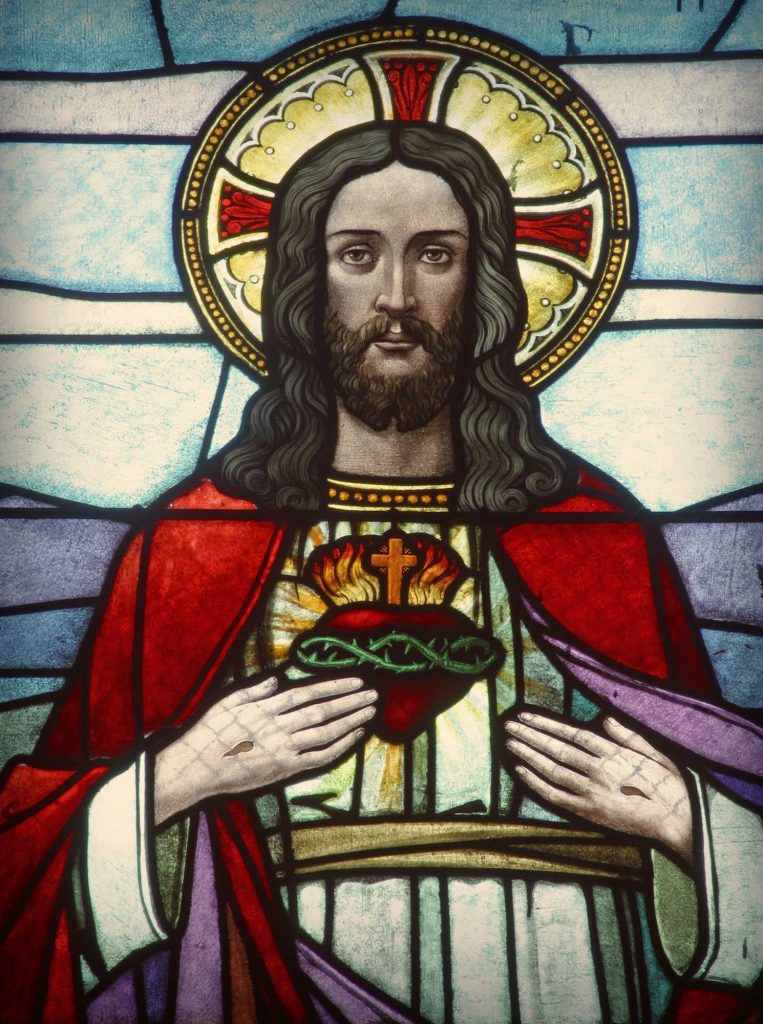 hope.” To where? To an Age of Love…
…the greatest of these is love… (1 Cor 13:13)
As individuals in the Church, we are being conceived, dying to self, and raised to new life throughout the centuries. But the Church as a whole is in labor. And she must follow Christ from the long winter of recent centuries to a “new springtime.”
Before Christ’s second coming the Church must pass through a final trial that will shake the faith of many believers… The Church will enter the glory of the kingdom only through this final Passover, when she will follow her Lord in his death and Resurrection. —CCC, 675, 677
But as St. Paul reminds us, we are being “transformed from glory to glory” (2 Cor 3:18), like a baby growing from stage to stage in its mother’s womb. Thus, we read in the Book of Revelation that “the woman clothed with sun,” whom Pope Benedict says is a symbol of both Mary and Mother Church…
…wailed aloud in pain as she labored to give birth. (Rev 12:2)
This “male child” that would come forth was”destined to rule all the nations with an iron rod.” But then St. John writes,
Her child was caught up to God and his throne. (12:5)
Of course, this is a reference to Christ’s ascension. But remember, Jesus has a body, a mystical Body to be born! The child to be born in the Age of Love, then, is the “whole Christ,” a “mature” Christ, so to speak:
…until we all attain to the unity of faith and knowledge of the Son of God, to mature manhood, to the extent of the full stature of Christ. (Eph 4:13)
In the Age of Love, the Church will at last reach “maturity.” The will of God will be the rule of life (ie. “the iron rod”) since Jesus said, “If you keep my commandments, you will remain in my love” (Jn 15:10).
This devotion [to the Sacred Heart} was the last effort of His love that He would grant to men in these latter ages, in order to withdraw them from the empire of Satan, which He desired to destroy, and thus to introduce them into the sweet liberty of the rule of His love, which He wished to restore in the hearts of all those who should embrace this devotion.—St. Margaret Mary,www.sacredheartdevotion.com
The tendrils of the Vine and Branches will reach to every coastland (cf. Isaiah 42:4)…
The Catholic Church, which is the kingdom of Christ on earth, [is] destined to be spread among all men and all nations… —POPE PIUS XI, Quas Primas, Encyclical, n. 12, Dec. 11th, 1925
…and the long foretold prophecies concerning the Jews will also come to fruition since they too will form part of the “whole Christ”:
The “full inclusion” of the Jews in the Messiah’s salvation, in the wake of “the full number of the Gentiles”, will enable the People of God to achieve “the measure of the stature of the fullness of Christ”, in which “God may be all in all”. —Catechism of the Catholic Church, n. 674
 In the boundaries of time, the greatest of these ages is Love. But it too is an age of anticipation when we will at last rest in the arms of Eternal Love… in the Eternal Age of Love.
Praised be the God and Father of our Lord Jesus Christ, he who in his great mercy gave us new birth; a birth unto hope which draws its life from the resurrection of Jesus Christ from the dead; a birth to an imperishable inheritance, incapable of fading or defilement, which is kept in heaven for you who are guarded with God’s power through faith; a birth to a salvation which stands ready to be revealed in the last days. (1 Pet 1:3-5)
The time has come to exalt the Holy Spirit in the world… I desire that this last epoch be consecrated in a very special way to this Holy Spirit…It is His turn, it is His epoch, it is the triumph of love in My Church, in the whole universe. —Jesus to Venerable María Concepción Cabrera de Armida; Fr. Marie-Michel Philipon, Conchita: A Mother’s Spiritual Diary, p. 195-196
The hour has come when the message of Divine Mercy is able to fill hearts with hope and to become the spark of a new civilization: the civilization of love. —POPE JOHN PAUL II, Homily, Krakow, Poland, August 18th, 2002; www.vatican.va
Ah, my daughter, the creature always races more into evil. How many machinations of ruin they are preparing! They will go so far as to exhaust themselves in evil. But while they occupy themselves in going their way, I will occupy Myself with the completion and fulfillment of My Fiat Voluntas Tua (“Thy will be done”) so that My Will reign on earth—but in an all-new manner. Ah yes, I want to confound man in Love! Therefore, be attentive. I want you with Me to prepare this Era of Celestial and Divine Love… —Jesus to Servant of God, Luisa Piccarreta, Manuscripts, Feb 8th, 1921; excerpt from The Splendor of Creation, Rev. Joseph Iannuzzi, p.80
…every day in the prayer of the Our Father we ask the Lord: “Thy will be done, on earth as it is in heaven” (Matt 6:10)…. we recognize that “heaven” is where the will of God is done, and that “earth” becomes “heaven”—i.e., the place of the presence of love, of goodness, of truth and of divine beauty—only if on earth the will of God is done. —POPE BENEDICT XVI, General Audience, February 1st, 2012, Vatican City
God loves all men and women on earth and gives them the hope of a new era, an era of peace. His love, fully revealed in the Incarnate Son, is the foundation of universal peace. —POPE JOHN PAUL II, Message of Pope John Paul II for the Celebration of the World Day of Peace, January 1, 2000
But even this night in the world shows clear signs of a dawn that will come, of a new day receiving the kiss of a new and more resplendent sun… In families, the night of indifference and coolness must give way to the sun of love. In factories, in cities, in nations, in lands of misunderstanding and hatred the night must grow bright as the day, nox sicut dies illuminabitur, and strife will cease and there will be peace. —POPE PIUX XII, Urbi et Orbi address,March 2nd, 1957; vatican.va
May there dawn for everyone the time of peace and freedom, the time of truth, of justice and of hope. —POPE JOHN PAUL II, Radio message, Vatican City, 1981
FURTHER READING:
- To understand the “big picture” with numerous references to the Popes, Church Fathers, teachings of the Church, and approved apparitions, see Mark’s book: The Final Confrontation.
- Why another age? Read The Vindication of Wisdom
- The coming “birthing” of the Church: The Great Yes
- The Church’s teaching on an Age of Love: The Coming Dominion of the Church
- Understanding the Kingdom of God and the Age of Love: The Coming of the Kingdom of God
The Now Word is a full-time ministry that
continues by your support.
Bless you, and thank you.

To journey with Mark in The Now Word,
click on the banner below to subscribe.
Your email will not be shared with anyone.