
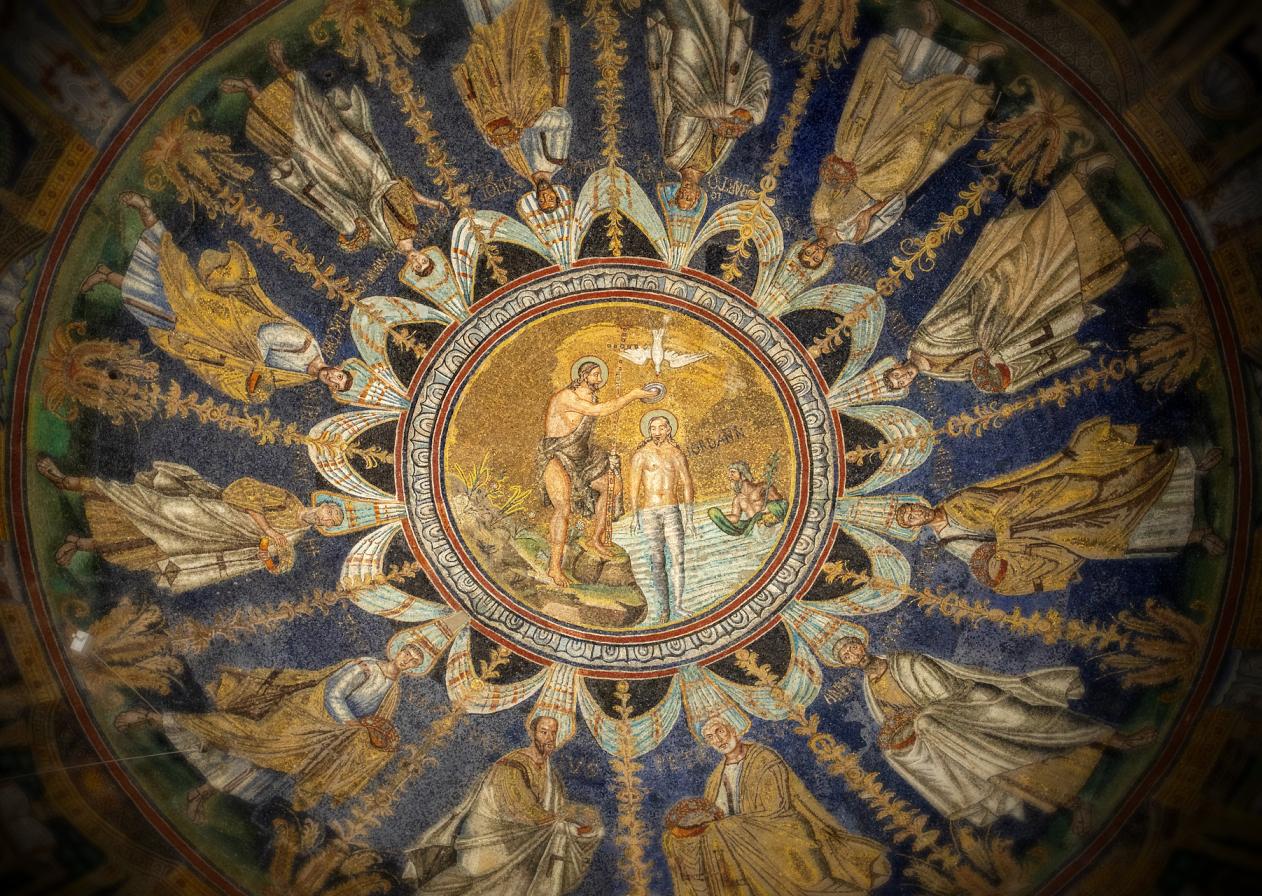
 The ceiling mosaic in the Baptistry of Neon in Ravenna, Italy
or on YouTube
The Church is not a democracy; it’s a monarchy.
Christ, high priest and unique mediator, has made of the Church “a kingdom, priests for his God and Father…” —Catechism of the Catholic Church, n. 1546
That is the context in which Peter’s role as “Pope” is properly understood: within a Kingdom.
David’s Dynasty
Matthew’s Gospel begins:
The book of the genealogy of Jesus Christ, the son of David…. (Matthew 1:1)
Jesus is the fulfillment of God’s promise to King David:
I have made a covenant with my chosen one; I have sworn to David my servant: I will make your dynasty stand forever and establish your throne through all ages. (Psalms 89:4-5)
Thus, the Angel Gabriel announced to Mary:
Behold, you will conceive in your womb and bear a son, and you shall name him Jesus. He will be great and will be called Son of the Most High, and the Lord God will give him the throne of David his father, and he will rule over the house of Jacob forever, and of his kingdom there will be no end. (Luke 1:31-33)
Jesus would himself say, “I have come not to abolish but to fulfill [the law and the prophets].” Thus,
The Lord Jesus inaugurated his Church by preaching the Good News, that is, the coming of the Reign of God, promised over the ages in the scriptures. To fulfill the Father’s will, Christ ushered in the Kingdom of heaven on earth. The Church “is the Reign of Christ already present in mystery.” —Catechism of the Catholic Church, n. 763
Fulfill, Not Abolish
The Old Testament foreshadowed Christ and His Kingdom, so it is no surprise that Jesus adopts and perfects elements of the Davidic Kingdom.
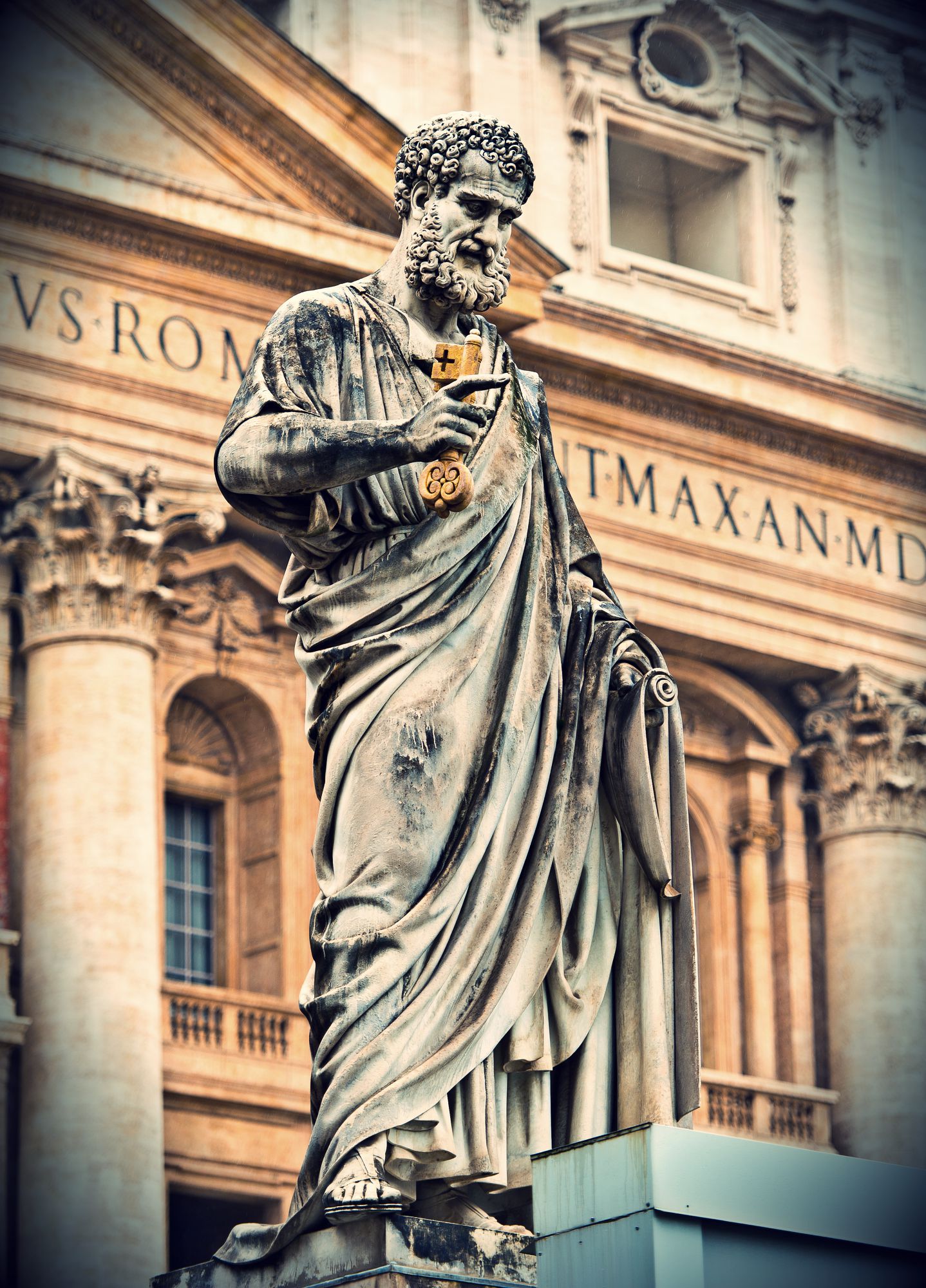
Most notably, David appointed a steward “over the household,”[1]Hebrew: Al Habayit, translates to “over the house” in Hebrew and refers to a high-ranking official or royal steward in ancient Israelite society, often serving directly under the king. over his kingdom — a practice carried on by his successors.[2]cf. Isaiah 22:15; 22:20 During 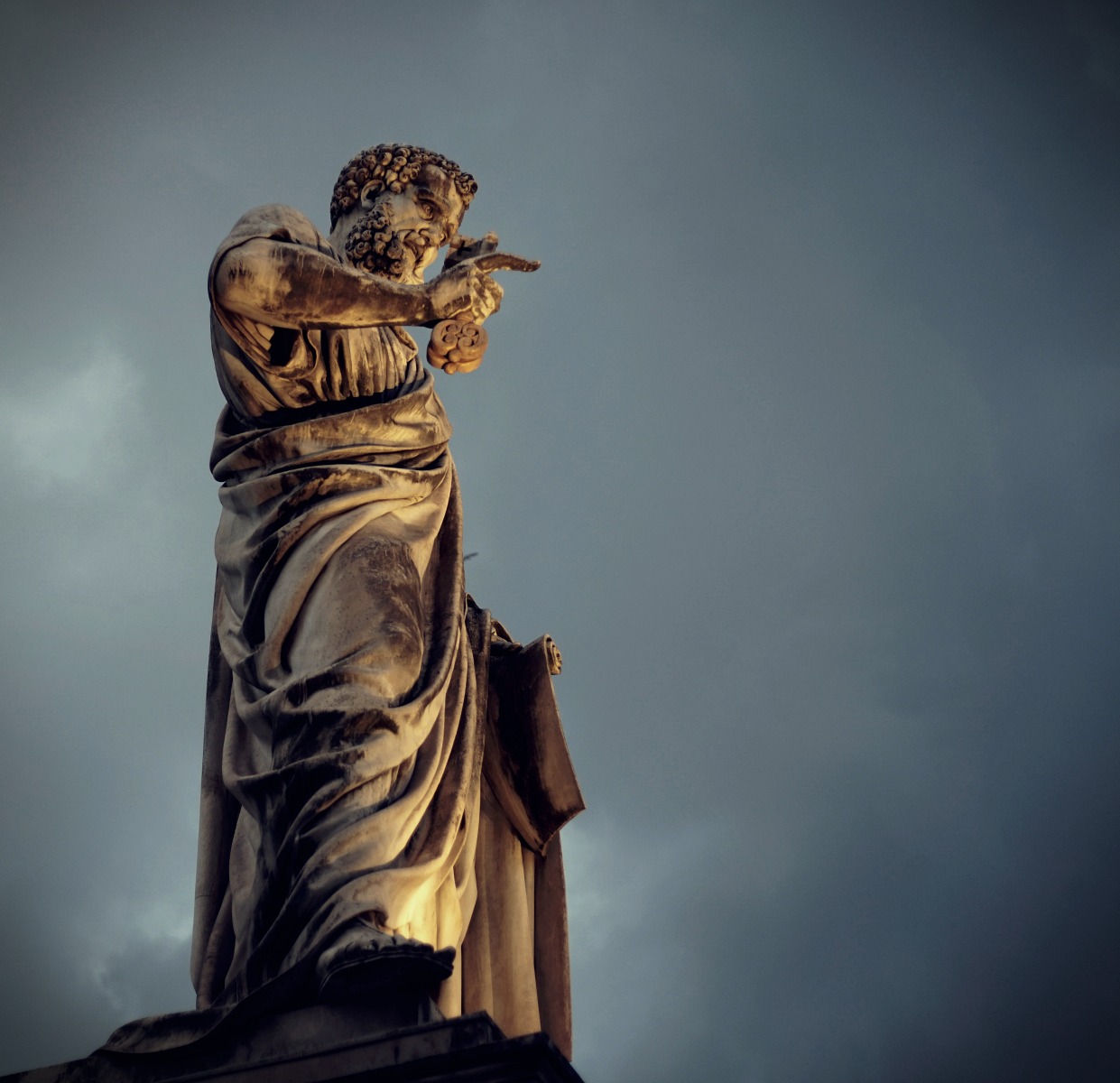 Hezekiah’s reign, Eliakim was named the steward, who acted as a kind of “prime minister.” Upon his shoulder, the king placed…
…the key of the house of David; he shall open, and none shall shut; and he shall shut, and none shall be open. I will fasten him like a peg in a sure place, and he will become a throne of honor… (Isaiah 22:22-23)
Sound familiar? Compare that to what Jesus did and said:
You are Peter and on this rock I will build My Church and the powers of death shall not prevail against it. I will give you the keys to the kingdom of heaven. Whatever you bind on earth shall be bound in heaven; and whatever you loose on earth shall be loosed in heaven. (Matthew 16:18-20)
Peter’s office is “rock” — like a “peg in a sure place.” And like Eliakim, his office comes with the King’s authority to open and close, to bind and loose — that is, to govern according not to his own whims, but according to what Jesus entrusted to him.
The pope isn’t an absolute sovereign, whose thoughts and desires are law. On the contrary, the ministry of the pope is the guarantor of the obedience toward Christ and His word. —POPE BENEDICT XVI, Homily of May 8, 2005; San Diego Union-Tribune
Moreover, the steward was seen as a kind of father over the kingdom:
I will clothe him with your robe, gird him with your sash, confer on him your authority. He shall be a father to the inhabitants of Jerusalem, and to the house of Judah. (Isaiah 22:21)
The word “pope” comes from the Latin “papa,” which in turn is derived from the Greek “πάππας” (páppas), meaning “father.” And so the Pope is seen as a kind of visible father to care for Christ’s flock. Another of the Pope’s titles is Vicar of Christ. The word “vicar” stems from the Latin “vicarius,” meaning “substitute” or “acting in the place of.” It’s because of what Jesus asked Peter directly…
“Simon, son of John, do you love me more than these?” Peter said to him, “Yes, Lord; you know that I love you.” He said to him, “Feed my lambs… tend My sheep… feed My sheep.” (John 21:15-17)
Hence, popes (and bishops) are often seen with a shepherd’s staff, representing their unique vocation to tend and feed Christ’s flock with the Word of God.
From the beginning, the Church understood that Peter held a special place within Christ’s Kingdom as both a “father” to the flock and a keeper of the Keys of the Kingdom. Hence, we hear such early Church figures as the great biblical translator, St. Jerome, say:
I follow no one as leader except Christ alone, and therefore I want to remain in union in the Church with you, that is with the chair of Peter. I know that on this rock the Church is founded. —St. Jerome in a letter to Pope Damasus, Letters, 15:2; (cf. The Chair of Rock)
And St. Ambrose famously said:
Where Peter is, there is the Church! —St. Ambrose, Bishop of Milan (c. 340–397)
The Royal Cabinet
While David granted special authority to the Steward as the keeper of the key, the king also retained a royal court, or you could say, cabinet ministers. Joab was the commander of David’s army; Jehosaphat was the chief chronicler of official records; Zadok was a high priest overseeing kingly ceremonies; Abiathar was a high priest and advisor; Seraiah was a scribe in the royal court; Benaiah served as a personal bodyguard, and so forth.
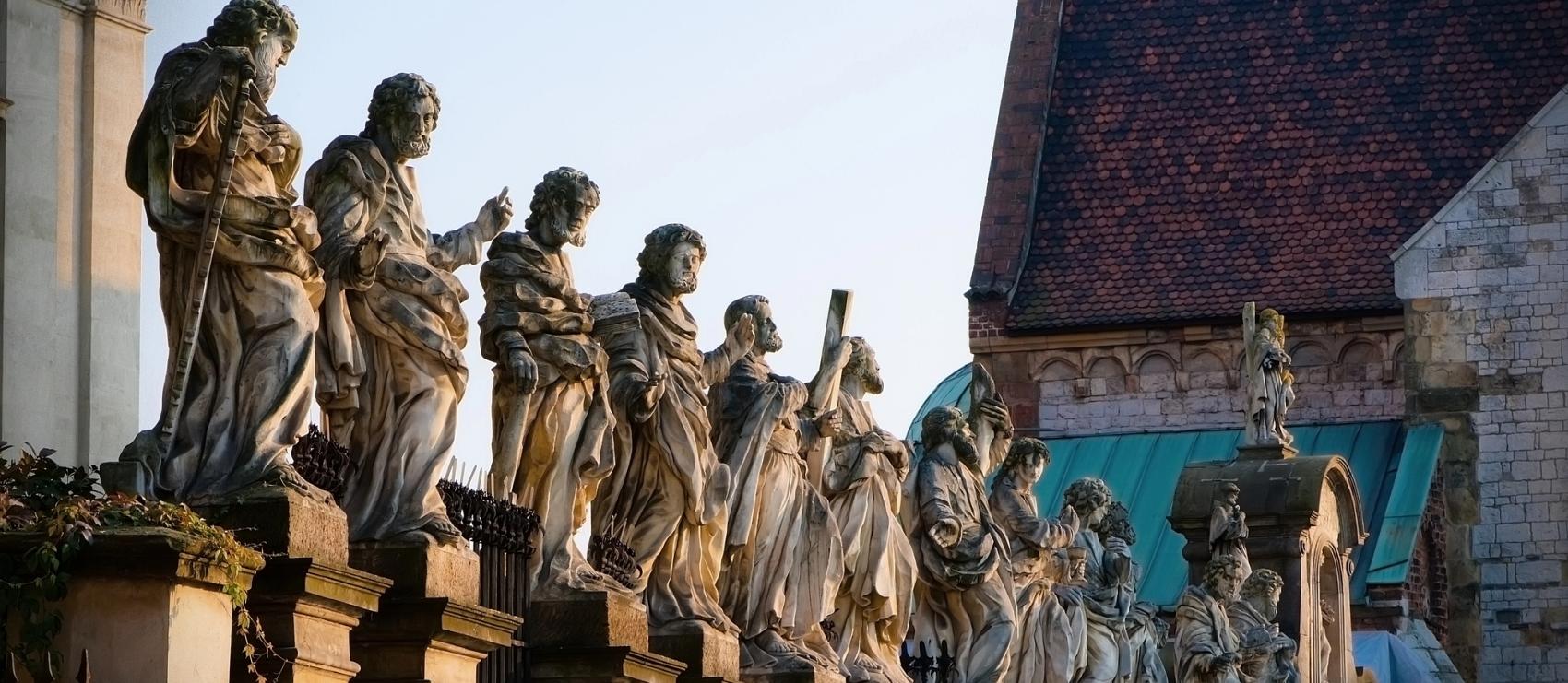
In Christ’s Kingdom on earth, the other eleven Apostles also share in the administrative power of Christ’s temporal kingdom. To them and their successors, He also said:
…whatever you bind on earth shall be bound in heaven, and whatever you loose on earth shall be loosed in heaven. (Matthew 18:18)
This applies most especially to the authority to forgive sins:
Receive the Holy Spirit. If you forgive the sins of any, they are forgiven; if you retain the sins of any, they are retained. (John 20:22-23)
In fact, so closely does Jesus identify with His chosen royal ministers that He says:
Whoever listens to you listens to Me. Whoever rejects you rejects Me. And whoever rejects Me rejects the one who sent Me. (Luke 10:16)
For that to be true, Jesus had to confer on the Twelve Apostles a share in His own infallibility…
You Will Know the Truth
The Catechism of the Catholic Church explains:
In order to preserve the Church in the purity of the faith handed on by the apostles, Christ who is the Truth willed to confer on her a share in his own infallibility. By a “supernatural sense of faith” the People of God, under the guidance of the Church’s living Magisterium, “unfailingly adheres to this faith.” …It is this Magisterium’s task to preserve God’s people from deviations and defections and to guarantee them the objective possibility of professing the true faith without error. —Catechism of the Catholic Church (CCC), 889-890
It is absolutely critical that Christians know the “true faith” throughout the ages, and here’s why. Jesus said, “…you will know the truth, and the truth will 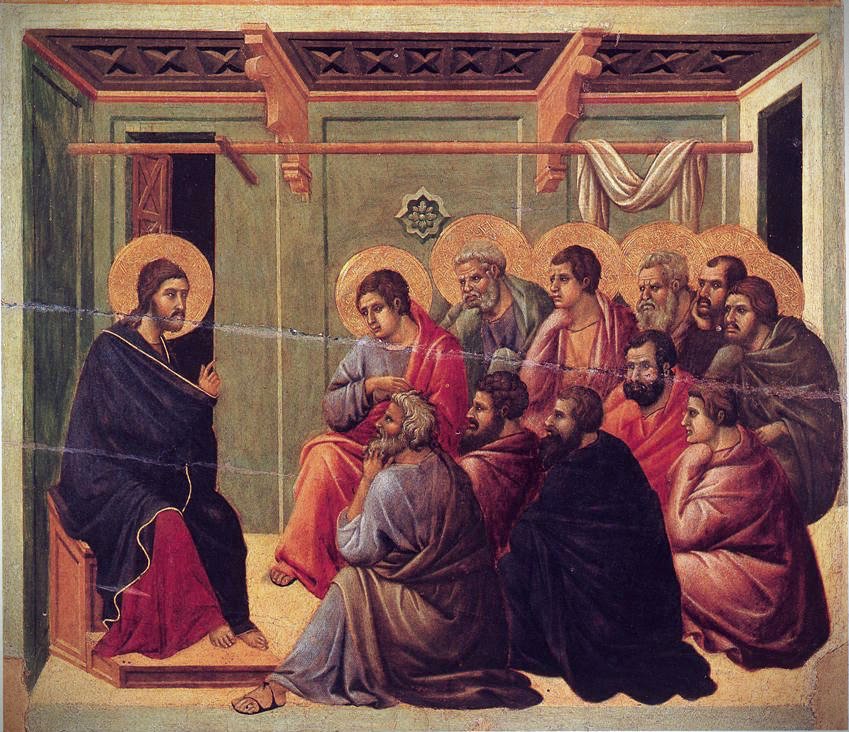 set you free.” [3]John 8:32 In contrast, He adds, “everyone who commits sin is a slave of sin.” [4]John 8:34 So you see what’s at stake: if we don’t know with certainty what the truth is, how can we be sure what sets us free? If the truth can be changed by a pope, or a council, or an ambitious theologian… then how can we be assured of freedom if such men were to lead us into error?
Case in point: the Anglican Church permits divorce and remarriage; the Catholic Church does not. Many Evangelical sects permit contraception; Catholic Tradition never has. The United Church allows euthanasia; Catholicism defends the sanctity of life from the womb to the tomb. So you see, knowing the truth is literally a matter of life and death.
Thus, Jesus promised His Royal Court that they would both know and be led into all truth:
The Holy Spirit that the Father will send in my name — He will teach you everything and remind you of all that [I] told you… When He comes, the Spirit of truth, He will guide you to all truth. (John 14:26, 16:13)
Thus, the pastoral duty of the Magisterium is aimed at seeing to it that the People of God abides in the truth that liberates. To fulfill this service, Christ endowed the Church’s shepherds with the charism of infallibility in matters of faith and morals… —CCC, 891
This promise of infallibility, however, is not a promise of impeccability: the Apostles, and their successors, are fallible men — sinners like everyone else. Hence, even Peter “the rock” can at times, by his witness and weakness, be a “stumbling stone.”
The fact that it is Peter who is called the “rock” is not due to any achievement on his part or to anything exceptional in his character; it is simply a nomen officii, a titled that designates, not a service rendered, but a ministry conferred, a divine election and commission to which no one is entitled solely by virtue of his own character — least of all Simon, who, if we are to judge by his natural character, was anything but a rock… And has it not been thus throughout the history of the Church that the Pope, the successor of Peter, has been at once Petra and Skandalon — both the rock of God and a stumbling block? —POPE BENEDICT XIV, from Das neue Volk Gottes, p. 80ff
 Yet, wrote St. Catherine of Siena:
To whom did He leave the keys of this Blood? To the glorious Apostle Peter, and to all his successors who are or shall be till the Day of Judgment, all of them having the same authority which Peter had, which is not diminished by any defect of their own. —from the Book of Dialogues
Jesus is not only a wise King, but a wise builder. Despite the sinners who have succeeded the Apostles, the Kingdom of Christ endures… as does “the rock” and the Royal Court.
…be like a wise man who built his house upon the rock… the rain fell, and the floods came, and the winds blew and beat upon that house, but it did not fall, because it had been founded on the rock. (Matthew 7:24-25)
…the barque of the Church is not mine but [Christ’s]. Nor does the Lord let it sink; it is He who guides it, surely also through those whom He has chosen, because He so wished. This has been, and is, a certainty which nothing can shake. —BENEDICT XVI, last General Audience, February 27th, 2013; Vatican.va
Related Reading
A 2600 year old seal bearing a steward’s name was found: see here
Thanks to those who have
contributed to this ministry
so that The Now Word can
continue to proclaim the Word.

To journey with Mark in The Now Word,
click on the banner below to subscribe.
Your email will not be shared with anyone.
Now on Telegram. Click:

Follow Mark and the daily “signs of the times” on MeWe:
Follow Mark’s writings here:
Listen on the following: