
THIS past Lent was a blessing for me to journey with tens of thousands of priests and laymen alike all over the world through the daily Mass meditations I wrote. It was exhilarating and exhausting at the same time. As such, I need to take some quiet time to reflect upon many things in my ministry and my own personal journey, and the direction God is calling me.
Of course, writing is only part of my apostolate. I have been welcomed by orthodox Catholic priests to speak or bring my concerts to their parishes or retreat houses, from San Francisco to Rome, Saskatchewan to Austria. However, four years ago, the Archdiocese of Edmonton, Alberta, refused to allow my ministry to come there. I wrote three letters asking for clarification and any advice on my ministry that the Archbishop could offer. I finally received this response in 2011:
The simple fact of the matter is that we have a policy in the Archdiocese, which stipulates that any speaker invited to address our people on matters of faith or morals must first receive a nihil obstat [Latin for “nothing hinders”] from me or my delegate. This is standard policy. In your case it was not granted because of indications on your website that you make reference to what you claim to have received in private revelations. This is an approach that I do not wish to promote within the Archdiocese of Edmonton. —Archbishop Richard Smith, Letter of April 4th, 2011
During this past Passion Week, 2015, two more neighbouring bishops of Edmonton have taken the same position resulting, regrettably, in us having to cancel a fourteen concert tour. One of the bishops cited that he was doing so because it is not ‘good pastoral policy for the two dioceses to be going in different directions.’ One of the bishops elaborated a bit further saying that he was concerned that our ministry utilizes a ‘promotional strategy’ of contacting parishes rather than waiting for an invitation; that my concerts use sound and lighting equipment in the sanctuary; and that my website, he alleged, “promotes” Poem of the Man-God, Vassula Ryden, and Garabandal. Below, in brief, are my responses to the bishops’ concerns for the sake of transparency and to give a general response to the letters I am receiving on this issue:
1. Our ministry does operate by invitation. What happens when we get one or several invites, is that my manager (my wife) then connects with other parishes in the area to let them know that I am coming, and offers our ministry to them. This ‘promotional strategy’ is the way that a host of other lay ministries operate in order to make our time and efforts efficient and cost-effective (since we also rely on Divine Providence). Above all, it is the way we try to bring the Gospel to as many souls as possible.
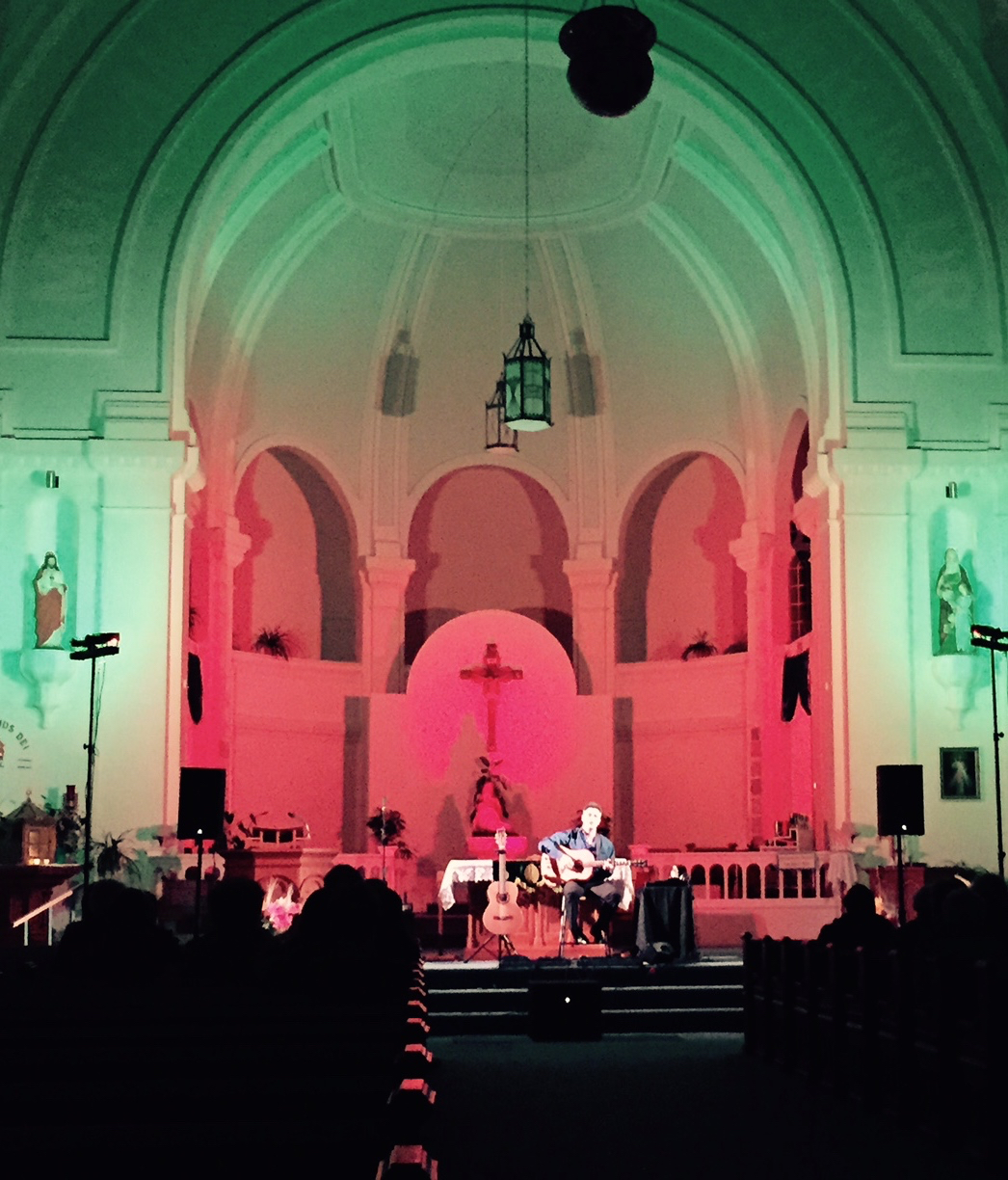
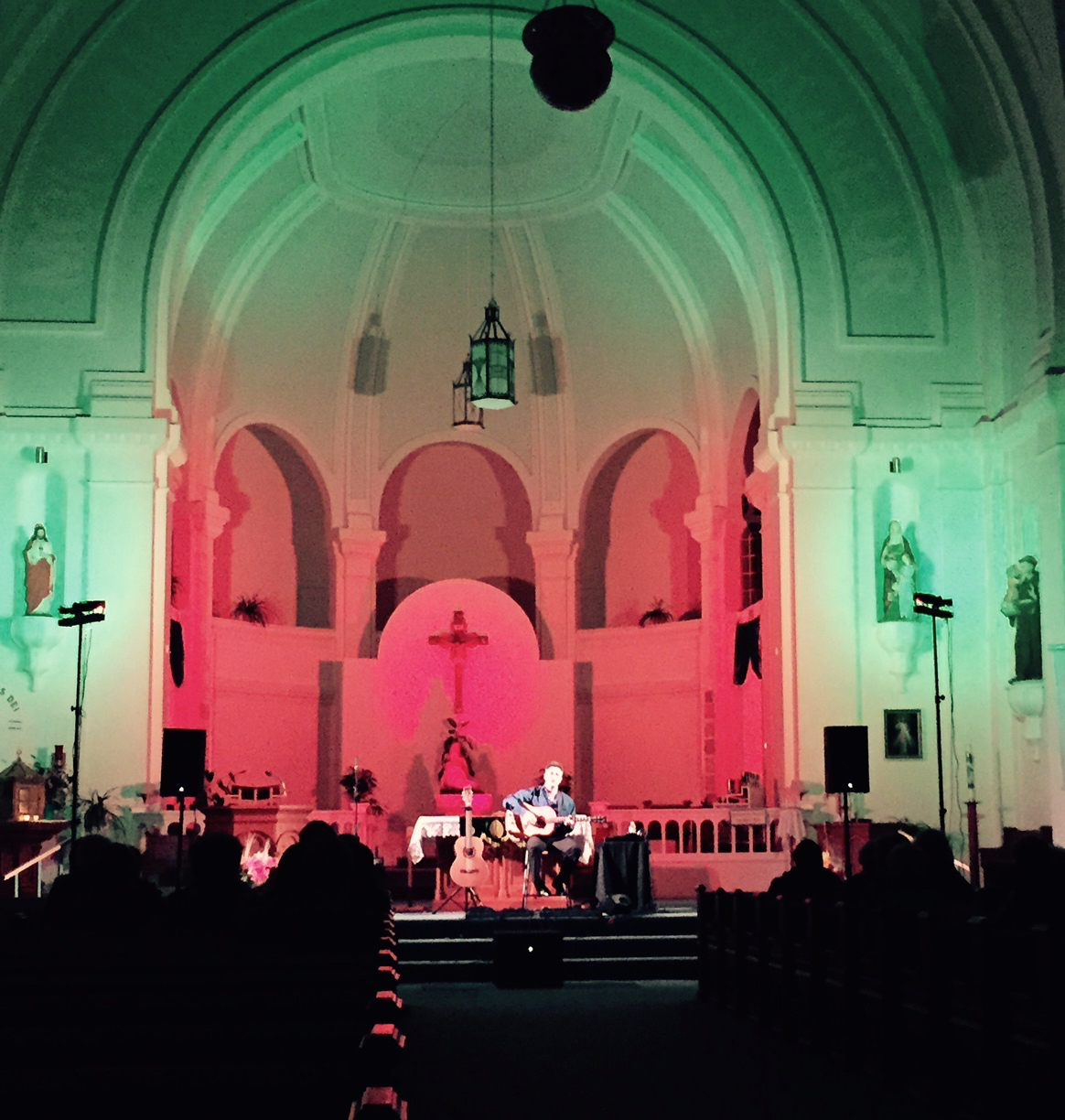
2. I do indeed use lighting and sound equipment for my concerts. I use a sound system for practical reasons that require no explanation. As for lighting, it is there to create a prayerful atmosphere conducive to this type of ministry. On our last 20-concert tour in Saskatchewan, we had literally dozens of priests and hundreds of concert-goers tell us how absolutely delighted they were with how beautiful the lighting was that emphasized the Crucifix, Tabernacle, and statues—in a word, highlighted the sacredness and beauty of their Catholic parishes. The only complaint I’ve ever had from priests regarding my lighting is that I was not leaving it there for them to keep! Reverence and respect of the sanctuary are of utmost importance. My concerts involve giving my testimony and pointing souls to the Eucharist and Confession, specifically catechizing on the Real Presence of Jesus in the Tabernacle. This is the main reason why it is our preference to hold concerts in the main body of the church (not to mention the significant drawbacks with acoustics in many parish halls).
3. There are over a thousand writings on my website, the vast majority teaching Catholic faith and spirituality in the context of our times. There are some writings that integrate “private revelation” as per the teachings of the Catechism that states that, while these revelations cannot correct Sacred Tradition, they can help the Church to ‘live more fully by it in a certain period of history’ (cf. n. 67).
• I have never read Poem of the Man-God nor have I ever quoted those works.
• Vassula Ryden has been a controversial figure, to be certain. I referred to her specifically to explain the position of the Congregation for the Doctrine of the Faith on Ms. Ryden’s theology in a “Q & A” with my readers (since there is a crossover of themes regarding an “era of peace”). [1]see Your Questions on the Era Among other facts, I noted that the Notification on her writings, though still in effect, has been modified to the extent that her volumes can now be read under the prudential “case by case” judgment of the bishops along with the clarifications she has provided to the CDF (and which met Cardinal Ratzinger’s approval) and which are published in subsequent volumes. In that spirit of caution, I quoted a single paragraph [2]cf. Fatima, and the Great Shaking from her writings.(Whenever quoting private revelation on my website that has not yet received an imprimatur or a nihil obstat, and has not been explicitly rejected by the Magisterium, I use the nomenclature of “alleged” to qualify the status of the proposed revelation.) The quote I used contained nothing contrary to Catholic doctrine.
• Garabandal (an alleged apparition in which an ecclesial commission investigating it said they had not “found anything deserving of ecclesiastical censure or condemnation either in the doctrine or in the spiritual recommendations that have been published”) [3]cf. www.ewtn.com is likewise mentioned very briefly in my writings. When it was, the term “alleged” was also duly included to remind the reader that caution is needed, according to St. Paul’s teaching: “Do not despise prophecy. Test everything, retain what is good.” In the quote I used, there is nothing contrary to Catholic doctrine.
A bishop has the right to determine how his flock is formed, and that includes preventing even those who are in good standing from speaking on Church property. In conclusion, I wish to affirm my obedience to the decision of these three Alberta bishops, and ask my readers to pray for me and all our clergy that they may have the grace to be faithful shepherds in the difficult task to which the Lord has called them.
AN OVERVIEW
Due to the fact that my ministry reaches thousands of people each week in my writing and webcast apostolate, including those in these dioceses, and because this “ban” has become a source of confusion for some, I have included below a basic overview of my ministry, which is conducted under the blessing and guidance of Most Reverend Bishop Don Bolen of Saskatoon, Saskatchewan, and the spiritual direction of Rev. Paul Gousse of New Hampshire, USA.
My ministry is comprised of two parts: my music and the message. The music serves as both a message and means to open the door to evangelization. It has been my response to St. John Paul II’s call to use “new means and new methods” in the “new evangelization.” In terms of the message, whether on this blog or in my book, The Final Confrontation, I have spent thousands of hours in diligent prayer and research to ensure as best as possible that everything I have written or spoken of is in harmony with Sacred Tradition. I have exhaustively quoted the Church Fathers, Sacred Scripture, the Catechism, the Holy Fathers, and approved apparitions of the Blessed Mother to strengthen the reader in these precarious times by constantly deferring to the Magisterium. On more rare occasions, I have quoted private revelation from individuals who are, at this time, feeling compelled to relay a “prophetic word” to the Church, but only when their message does not conflict with Church teaching. [4]cf. 1 Thess 5:19-21 Lastly, I have never claimed in my writings or webcasts to have ever received an apparition or an audible locution. I have at times shared inspirations and thoughts that I sensed were heavenly that have come from my interior prayer and meditation, or what the Church may call lectio divina. On those occasions, I have shared that “I sensed” or “felt” the Lord or Our Lady, etc. saying this or that. I have shared them as a starting point or to shed some extra light and discernment on the greater body of this work. In some instances, those interior words have been the catalyst to discover or expand the teachings of the Holy Father.
A CALLING TO YOUTH
In 2002 at World Youth Day in Toronto, Canada, where I gathered with youth from all over the world, the Holy Father made a specific request to us:
In the heart of the night we can feel frightened and insecure, and we impatiently await the coming of the light of dawn. Dear young people, it is up to you to be the watchmen of the morning who announce the coming of the sun who is the Risen Christ! —POPE JOHN PAUL II, Message of the Holy Father to the Youth of the World, XVII World Youth Day, n. 3; (cf. Is 21:11-12)
This was an echo of his appeal in the Apostolic Letter on the new millennium:
The young have shown themselves to be for Rome and for the Church a special gift of the Spirit of God… I did not hesitate to ask them to make a radical choice of faith and life and present them with a stupendous task: to become “morning watchmen” at the dawn of the new millennium. —POPE JOHN PAUL II, Novo Millennio Inuente, n.9
In my book, I detailed in Chapter One how I felt the Lord calling me to respond to the Holy Father’s invitation by helping to prepare hearts for this “crossing the threshold of hope” into a new era. This invitation was reiterated by Pope Benedict XVI in Sydney, Australia:
Empowered by the Spirit, and drawing upon faith’s rich vision, a new generation of Christians is being called to help build a world in which God’s gift of life is welcomed, respected and cherished—not rejected, feared as a threat, and destroyed. A new age in which love is not greedy or self-seeking, but pure, faithful and genuinely free, open to others, respectful of their dignity, seeking their good, radiating joy and beauty. A new age in which hope liberates us from the shallowness, apathy, and self-absorption which deaden our souls and poison our relationships. Dear young friends, the Lord is asking you to be prophets of this new age… —POPE BENEDICT XVI, Homily, World Youth Day, Sydney, Australia, July 20th, 2008
Essentially, the popes have asked us young people to exercise the normative office of prophecy:
The faithful, who by Baptism are incorporated into Christ and integrated into the People of God, are made sharers in their particular way in the priestly, prophetic, and kingly office of Christ. —Catechism of the Catholic Church, 897
Even though the order of the law and old testament prophets ceased in John the Baptist, the operation in the prophetic spirit of Christ has not. [5]see Silencing the Prophets; also, POPE BENEDICT XIV, Heroic Virtue, Vol. III, pp. 189-190; this is not to say that prophecy or prophets have ceased since John the Baptist, but that a new order has emerged. “Prophets” are listed as one of the specific members of the body of Christ in St. Paul’s ordering of the Church; cf. 1 Cor 12:28 While every Catholic shares in His prophetic office, the Second Vatican Council also affirmed the charism of prophecy as a particular gift in the order of grace.
It is not only through the sacraments and the ministrations of the Church that the Holy Spirit makes holy the People, leads them and enriches them with his virtues. Allotting his gifts according as he wills (cf. 1 Cor. 12:11), he also distributes special graces among the faithful of every rank. By these gifts he makes them fit and ready to undertake various tasks and offices for the renewal and building up of the Church, as it is written, “the manifestation of the Spirit is given to everyone for profit” (1 Cor. 12:7). Whether these charisms be very remarkable or more simple and widely diffused, they are to be received with thanksgiving and consolation since they are fitting and useful for the needs of the Church. —Lumen Gentium, 12
It would seem, then, that based on the Church’s Sacred Tradition and her Magisterium, prophetic utterances are to be considered with proper discernment. This is precisely what St. Paul taught:
Do not quench the Spirit. Do not despise prophetic utterances. Test everything; retain what is good. (1 Thess 5:19-21)
Neither does the Church hold that the prophetic office is exercised only by ecclesiastical members of the Body:
Christ… fulfills this prophetic office, not only by the hierarchy… but also by the laity. He accordingly both establishes them as witnesses and provides them with the sense of the faith [sensus fidei] and the grace of the word. —Catechism of the Catholic Church, n. 904
It is worth pointing out, perhaps, that the entire ministry of St. Paul was the result of a “revelation” and interior illumination when Christ appeared to him in a brilliant light. [6]cf. Acts 9:4-6 St. Paul was taught many things, and openly shared these “visions and revelations” [7]2 Cor 12:1-7 that later formed part of the New Testament and, of course, the Public Revelation of the Church, depositum fidei. [8]the “deposit of faith” Any “private revelation” today that contradicts or attempts to add to the deposit of faith is considered false. However, authentic private revelation, gratia gratis data—“grace freely given”—is to be welcomed. In his instruction regarding private relevation, Pope Benedict XIV wrote:
[There]… are heavenly and divine private revelations by which God sometimes illuminates and instructs a person for his own eternal salvation, or that of others. —POPE BENEDICT XIV (1675-1758), Heroic Virtue, Vol. III, p. 370-371; from Private Revelation, Discerning With The Church, Dr. Mark Miravalle, p. 11
These “revelations,” in whatever forms they take…
…help us to understand the signs of the times and to respond to them rightly in faith. —Cardinal Joseph Ratzinger (POPE BENEDICT XVI), Message of Fatima, “Theological Commentary”, www.vatican.va
It is in that spirit of service, responding to the Holy Father’s call to be “watchmen” and “prophets of this new age,” that I have conveyed on occasion, under spiritual direction, certain meditations and “words” from prayer. As Pope Francis said in Evangelii Gaudium, we are ‘communicating to others what one has contemplated’ and that…
The Holy Spirit… “today, just as at the beginning of the Church, acts in every evangelizer who allows himself to be possessed and led by him. The Holy Spirit places on his lips the words which he could not find by himself.” —Evangelii Gaudium, cf. n. 150-151
This is not to claim that I am a “prophet” or “seer,” but rather that I have tried to exercise my baptismal calling to operate in the prophetic office of Christ. I have done so, to the best of my ability, with the Magisterium and Sacred Tradition as my guide. I believe this is the proper spirit of discernment St. Paul urged. Still, the Church must be the ultimate judge of everything I’ve written since my words, inspirations, and teachings flow through a human vessel.
In every age the Church has received the charism of prophecy, which must be scrutinized but not scorned. —Cardinal Joseph Ratzinger (POPE BENEDICT XVI), Message of Fatima, “Theological Commentary”, www.vatican.va
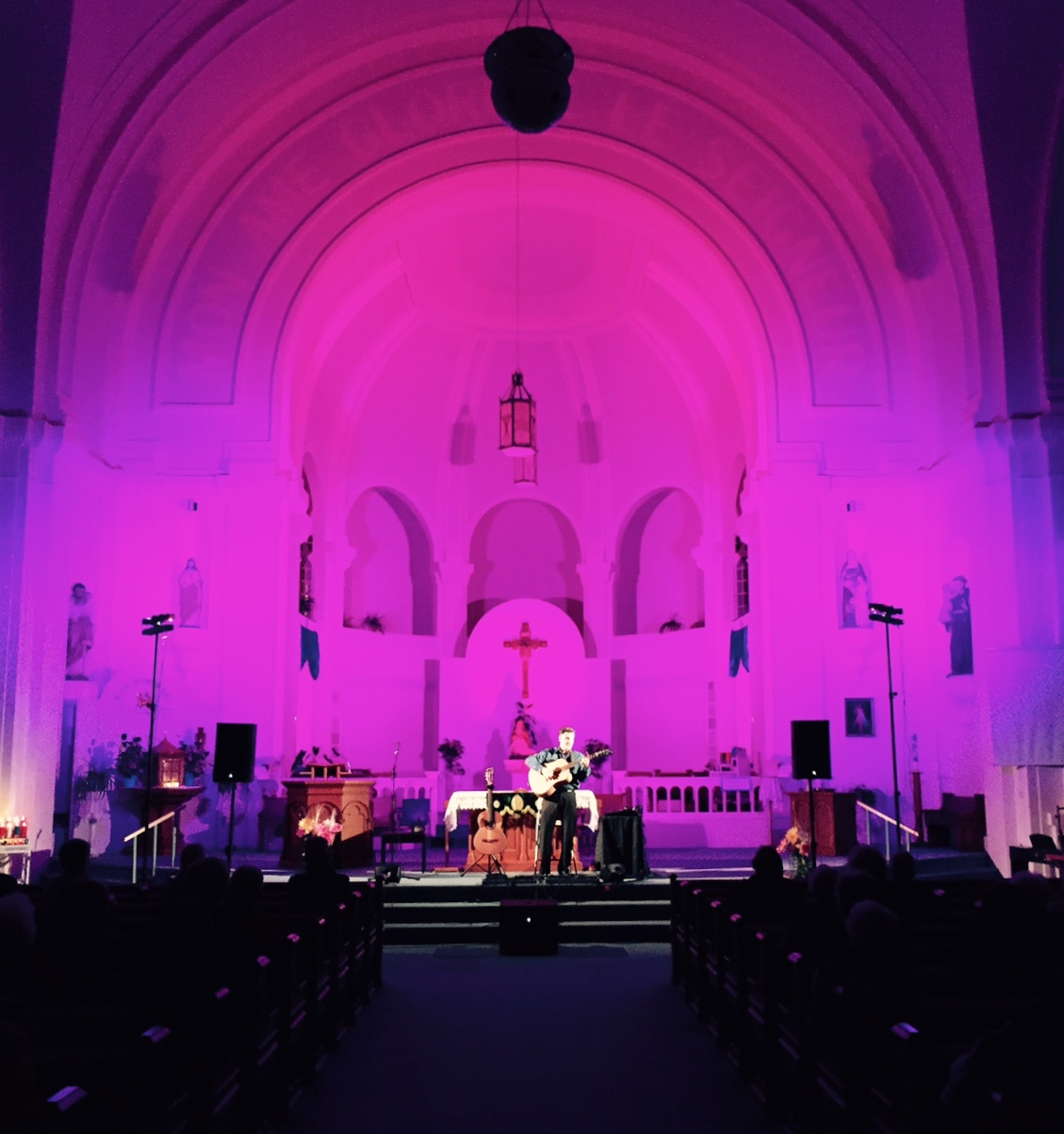 Mark in concert in Ponteix, Sk, 2015

Footnotes
| ↑1 | see Your Questions on the Era |
|---|---|
| ↑2 | cf. Fatima, and the Great Shaking |
| ↑3 | cf. www.ewtn.com |
| ↑4 | cf. 1 Thess 5:19-21 |
| ↑5 | see Silencing the Prophets; also, POPE BENEDICT XIV, Heroic Virtue, Vol. III, pp. 189-190; this is not to say that prophecy or prophets have ceased since John the Baptist, but that a new order has emerged. “Prophets” are listed as one of the specific members of the body of Christ in St. Paul’s ordering of the Church; cf. 1 Cor 12:28 |
| ↑6 | cf. Acts 9:4-6 |
| ↑7 | 2 Cor 12:1-7 |
| ↑8 | the “deposit of faith” |