
You are heading towards a future
where truth will be present in few hearts…
Many will seek the glories of the world
and will scorn true doctrine.
Behold, the Time of Sorrows.
Pray, pray, pray.
Whatever happens,
do not turn away
from the Church of my Jesus.
—Our Lady to Pedro Regis,
January 27, 2026
or on YouTube
More questions have come forward about the Catholic Faith from my Protestant reader — questions that now expose the heart of our dialogue: how we approach Scripture.
While he has asked further questions about the perpetual virginity of Mary, the Catholic use of the word “Saints,” the question of their intercession, and so on… there really is no point in addressing these until the principle by which this reader operates is first addressed, that is, the Protestant doctrine of Sola Scriptura. This is the belief that Scripture alone is the infallible source for Christian faith and practice. For example, here are some comments from his letter:
While you present your arguments thoughtfully and with evident sincerity, several points have led me to return to biblical first principles… Following Catholic tradition, it upholds Mary’s perpetual virginity. Yet, from a Sola Scriptura standpoint, I find the biblical evidence indirect at best… Sola Scriptura as Our Guardrail at the heart of the Reformation is the conviction that Scripture alone is the final and sufficient authority for faith and practice.
He then notes a few Scriptures he believes support this doctrine:
All Scripture is God-breathed and equips us for every good work. (2 Timothy 3:16–17)
We are warned not to add to or take away from God’s Word. (Revelation 22:18–19)
Even if an angel from heaven preaches a different gospel, let him be accursed. (Galatians 1:8)
Sola Scriptura — Is That in the Bible?
The question that should be most obvious to every reader at this point is: “If the Bible is the sole infallible authority for faith and practice, where does it say that in the Bible?” Let’s take a closer look, then, at the Scriptures he cites in defence of his Protestant doctrine.
Timothy said this: “All Scripture is inspired by God and is useful for teaching, for refutation, for correction, and for training in righteousness.”[1]2 Timothy 3:16 Yes, the Scriptures are “inspired” and “useful”, but that does not mean they are, therefore, the sole authority on doctrinal matters. Timothy does not say that.
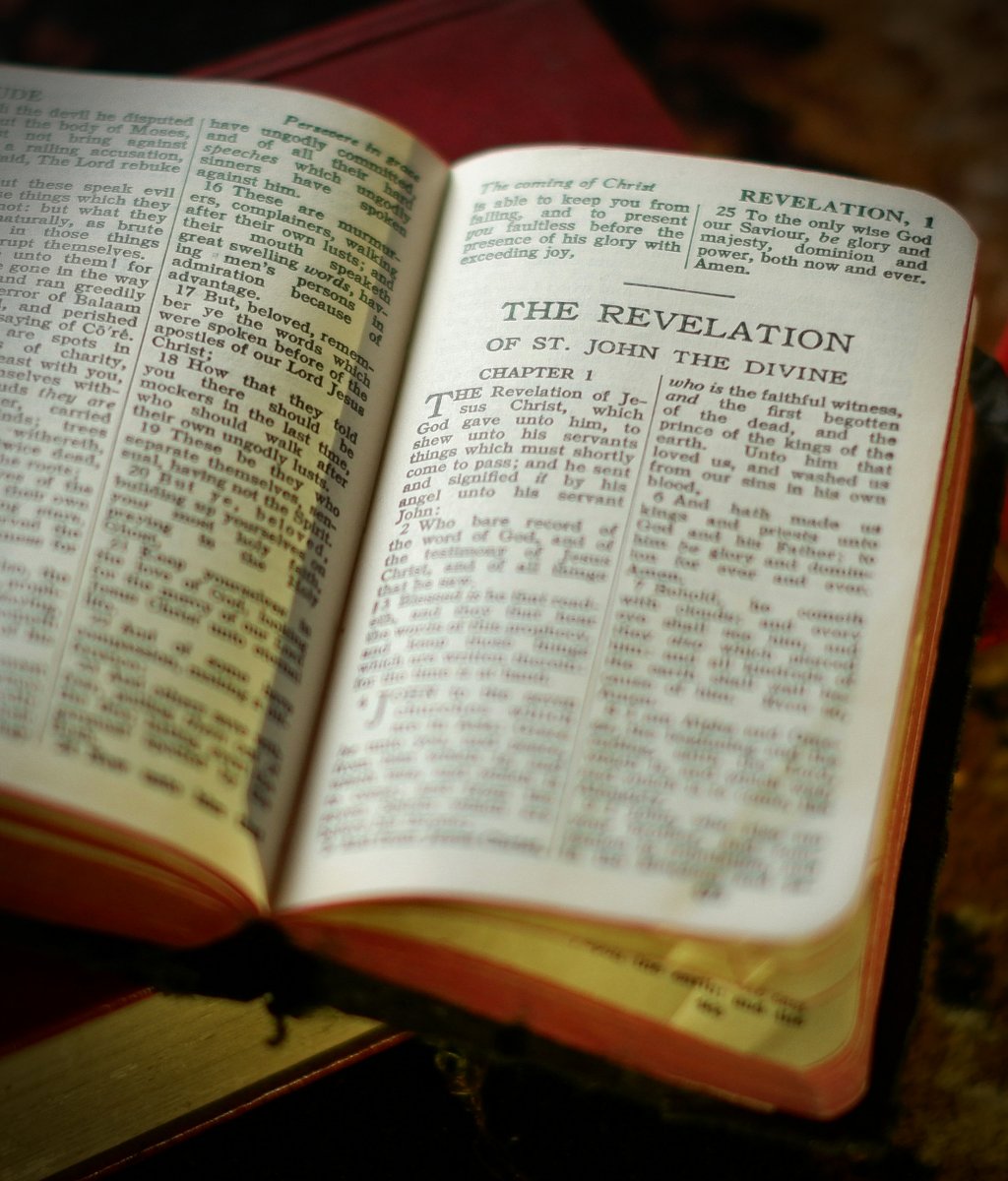 Next, St. John’s warning about adding or omitting words pertains not to the Bible as a whole but to the Book of Revelation, a single document he wrote on the island of Patmos. Here’s what that verse says:
I warn everyone who hears the prophetic words in this book: if anyone adds to them, God will add to him the plagues described in this book… (Revelation 22:18)
Again, nothing said here at all about the Bible being the sole authority on matters of faith and morals, though I would agree that omitting or altering any biblical texts is a very bad idea.
Finally, St. Paul says that if someone preaches a different gospel, let him be accursed. But what gospel is he referring to, and where is it? According to the same St. Paul, it is precisely what He and the Apostles have been teaching not only in some of their letters, but in unwritten traditions:
Therefore, brothers, stand firm and hold fast to the traditions that you were taught, either by an oral statement or by a letter of ours. (2 Thessalonians 2:15)
I praise you because you remember me in everything and hold fast to the traditions, just as I handed them on to you. (1 Corinthians 11:2)
It’s clear in these passages that the sole authority for what is true and what is not, what are authentic traditions and what are not, comes from the word of the Apostles, precisely because it’s what they received from Jesus himself:
For I received from the Lord what I also handed on to you… (1 Corinthians 11:23; cf. 11:2)
In fact, St. Paul explicitly affirms to Timothy that it is not Scripture that is the sole authority of these “traditions” but the Church, the living stones, whose foundation is the Apostles:[2]cf. Revelation 21:14
You should know how to behave in the household of God, which is the church of the living God, the pillar and foundation of truth. (1 Timothy 3:15)
The pillar and foundation of truth is the Church, not the Bible, which came from the Church. The doctrine of Sola Scriptura, popularized by Martin Luther in the 16th century, is nowhere found in the Scriptures and, in fact, is contradicted by them.
The Pillar and Foundation of Truth
Of course, there was no Bible as we know it when the early Church began to proclaim the Word. That’s a problem for those who promote Sola Scriptura. How was the faith taught if they didn’t have bible tracts to hand out? For the Gospels and various letters and epistles were written sometimes many decades later, and even then, were not always available to every community in written form. So how was the “gospel” faithfully transmitted to the budding Christian communities?
Early church historian, J. N. D. Kelly, a Protestant, concludes:
The most obvious answer was that the apostles had committed it orally to the Church, where it had been handed down from generation to generation. — Early Christian Doctrines, 37
The first generation of Christians did not yet have a written New Testament, and the New Testament itself demonstrates the process of living Tradition. —Catechism of the Catholic Church (CCC), n.83
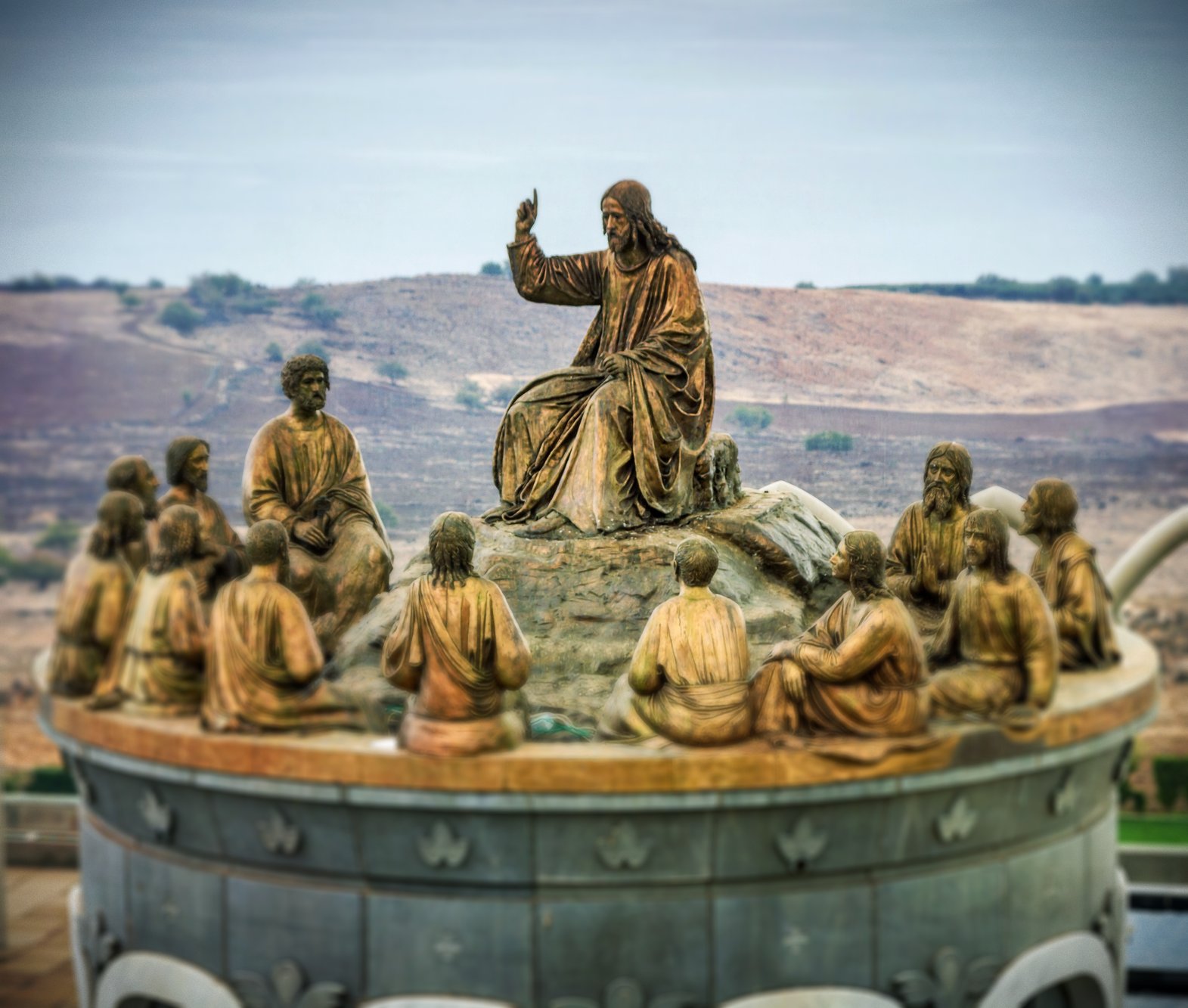 Jesus didn’t hand the Apostles a book or stack of pamphlets, but communicated this “living Tradition” to them orally. It was further passed on in two ways: first, orally…
…by the apostles who handed on, by the spoken word of their preaching, by the example they gave, by the institutions they established, what they themselves had received — whether from the lips of Christ, from His way of life and His works, or whether they had learned it at the prompting of the Holy Spirit. —CCC, n. 76
Let me pause, because you might be wondering at this point how the Apostles and those whom they taught could have faithfully remembered and communicated this living Tradition. The answer is that Jesus promised them supernatural help:
When He comes, the Spirit of truth, He will guide you to all truth. (John 16:13)
As someone who has spent the past four decades studying the teachings of the Church, I can also affirm that there is an unbroken chain of truth from the time of Christ to the present. But of course, this has not only come to us orally but in writing as well…
…by those apostles and other men associated with the apostles who, under the inspiration of the same Holy Spirit, committed the message of salvation to writing… Sacred Scripture is the speech of God… —CCC, n.76, 81
St. John said in his Third Letter:
I have much to write to you, but I do not wish to write with pen and ink. Instead, I hope to see you soon, when we can talk face to face. (3 John 13-14)
One of those face-to-face conversations with St. John seemingly took place with Apostolic Father, Papias of Hierapolis (c. 60-130 A.D.), who recounts:
I will not hesitate to add also for you to my interpretations what I formerly learned with care from the Presbyters and have carefully stored in memory, giving assurance of its truth. For I did not take pleasure as the many do in those who speak much, but in those who teach what is true, nor in those who relate foreign precepts, but in those who relate the precepts which were given by the Lord to the faith and came down from the Truth itself. And also if any follower of the Presbyters happened to come, I would inquire for the sayings of the Presbyters, what Andrew said, or what Peter said, or what Philip or what Thomas or James or what John or Matthew or any other of the Lord’s disciples, and for the things which other of the Lord’s disciples, and for the things which Aristion and the Presbyter John, the disciples of the Lord, were saying. For I imagined that what was to be got from books was not so profitable to me as what came from the living and abiding voice. —Church History, Eusebius, Book III, Ch. 39, n. 3-4
In summary, the Catechism of the Catholic Church says:
Sacred Tradition and Sacred Scripture, then, are bound closely together, and communicate one with the other. For both of them, flowing out from the same divine well-spring, come together in some fashion to form one thing, and move towards the same goal. —CCC n.80
On Whose Authority?
Since these traditions and written words were handed down to us by the Apostles and their successors, it is clear that…
…the task of interpretation has been entrusted to the bishops in communion with the successor of Peter, the Bishop of Rome. —CCC, n. 85
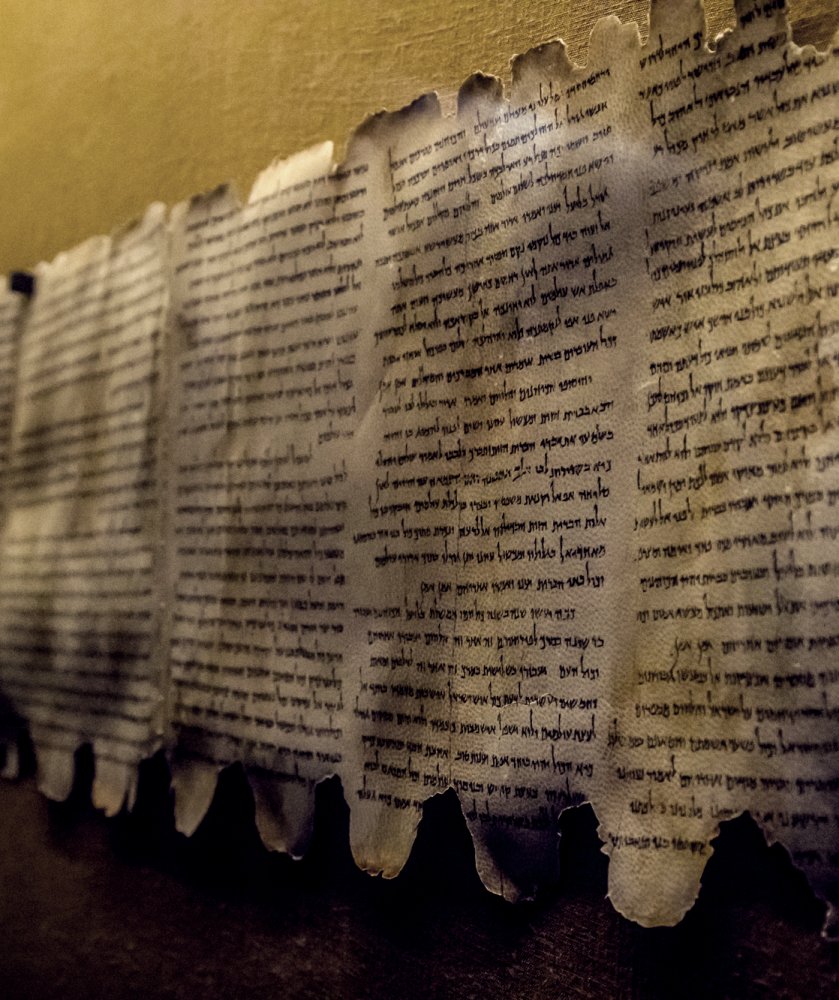
Dead Sea Scrolls containing biblical fragments
While various letters, gospels, and other writings floated around for several centuries, it wasn’t until the Synod of Rome under Pope Damasus in A.D. 382, followed by the councils of Hippo (393 A.D.) and Carthage (393, 397 A,D,) that it was determined what would be included in the New and Old Testament which we have today — the “canon” of the Bible.[3]Note: Protestant reformers removed seven books from the Old Testament canon during the Reformation, which are referred to as the deuterocanonical books by Catholics. These books include Tobit, Judith, Wisdom, Ecclesiasticus [or Sirach], Baruch, and 1 and 2 Maccabees. At the time, there were other writings, such as the seven letters of Ignatius, the Letter of Clement [the fourth pope] to the Corinthians, the Didache, and The Shepherd that were revered by many Christians. But these were determined not to be “inspired” and part of the canon of Scripture.
In other words, as the Church’s Magisterium (ie. teaching authority), they alone possessed the “deposit of faith” handed on to them as the sole standard by which to not only judge other writings, but to faithfully interpret what the Scriptures mean in the first place. To be clear:
…this Magisterium is not superior to the Word of God, but is its servant. It teaches only what has been handed on to it. At the divine command and with the help of the Holy Spirit, it listens to this devotedly, guards it with dedication and expounds it faithfully. All that it proposes for belief as being divinely revealed is drawn from this single deposit of faith. —CCC, n. 86
Of course, my Protestant reader says we must return to Scripture alone to resolve doctrinal questions (such as Mary’s perpetual virginity, purgatory, papal infallibility, and so on). But he’s not being intellectually honest at this point, in my opinion. Whose interpretation of Scripture exactly does he propose? Thousands of Protestant denominations exist today precisely because they cannot agree on an authoritative interpretation of certain Scriptures — and so they split from one another. Yet, the very Word of God they appeal to warns them:
Know this first of all, that there is no prophecy of scripture that is a matter of personal interpretation… (2 Peter 1:20-21)
There’s a wonderful story in the Acts of the Apostles that serves as an antidote to Sola Scriptura. It’s when an Ethiopian who was traveling from Jerusalem was reading the Scriptures and happened upon Philip. The Apostle, inspired by the Holy Spirit, strode up to his chariot and asked the eunuch:
“Do you understand what you are reading?” [The Ethiopian] replied, “How can I, unless someone instructs me?” So he invited Philip to get in and sit with him. (Acts 8:30-31)
That’s the humble approach that all of us should take before the Word of God, handed down to us through the ages from Philip and his fellow Apostles. We need to ask them to get in our chariot, so to speak, because it is the Church that is “the pillar and foundation of truth,” not my subjective interpretation. Because there are some things in the Bible that are not always self-evident; there are truths that Jesus taught, things He did, that are actually not all written down, as St. John said (cf. John 20:30, 21:25, Acts 1:3).[4]In Acts 20:35, we hear St. Paul tell his listeners: “Keep in mind the words of the Lord Jesus who himself said, ‘It is more blessed to give than to receive.” This passage is found nowhere in the Gospels, evidence that some of Jesus’ teachings and sayings were not fully written down, as St. John testifies. There are beliefs and practices that the Church adopted and developed from the Old Testament, always in the context of all the oral and written traditions that they received from Jesus and His Apostles.
In other words, the “Guardrail”, as my Protestant reader calls it, is not the Bible alone, but the Bible and the Church.
It is clear therefore that, in the supremely wise arrangement of God, Sacred Tradition, Sacred Scripture and the Magisterium of the Church are so connected and associated that one of them cannot stand without the others. Working together, each in its own way, under the action of the one Holy Spirit, they all contribute effectively to the salvation of souls. —CCC, n. 95
 And this has been understood from the very beginning:
[I]t is incumbent to obey the presbyters who are in the Church [cf. Heb 13:17] — those who, as I have shown, possess the succession from the apostles; those who, together with the succession of the episcopate, have received the infallible charism of truth, according to the good pleasure of the Father. —St. Irenaeus of Lyons (189 AD), Against Heresies, 4:33:8
A Warning Against Subjectivism
Before Jesus ascended into Heaven, He commanded the remaining eleven Apostles:
Go, therefore, and make disciples of all nations… teaching them to observe all that I have commanded you. (Matthew 28:19-20)
Why would one not turn, then, to these Apostles, and to their successors, to make sure that one is receiving “all” that Jesus has taught, and how it is to be understood? Why would you not turn to those successors who compiled the authentic writings of the early Church into a “bible” in order to understand its pages correctly? As Peter, the first pope, said of Paul’s writings:
In them, there are some things hard to understand that the ignorant and unstable distort to their own destruction, just as they do the other Scriptures. (2 Pet 3:16)
 Therefore, Pope Benedict XVI spoke pointedly about the danger of self-anointed interpretation when he addressed the Ecumenical Meeting in New York 18 years ago:
Fundamental Christian beliefs and practices are sometimes changed within communities by so-called “prophetic actions” that are based on a hermeneutic [method of interpreting] not always consonant with the datum of Scripture and Tradition. Communities consequently give up the attempt to act as a unified body, choosing instead to function according to the idea of “local options.” Somewhere in this process the need for… communion with the Church in every age is lost, just at the time when the world is losing its bearings and needs a persuasive common witness to the saving power of the Gospel (cf. Rom 1:18-23). —POPE BENEDICT XVI, St. Joseph’s Church, New York, April 18th, 2008
I will close then with two relevant and sober warnings, given the “signs of the times” and confusion in our days:
We instruct you, brothers, in the name of [our] Lord Jesus Christ, to shun any brother who conducts himself in a disorderly way and not according to the tradition they received from us. (2 Thessalonians 3:6)
Let us note that the very tradition, teaching, and faith of the Catholic Church from the beginning, which the Lord gave, was preached by the Apostles, and was preserved by the Fathers. On this was the Church founded; and if anyone departs from this, he neither is nor any longer ought to be called a Christian… —St. Athanasius (360 AD), Four Letters to Serapion of Thmius 1, 28
Related Reading
The Fundamental Problem of Sola Scriptura
The Unfolding Splendor of Truth
So grateful for your prayers and support.
Thank you!

To journey with Mark in The Now Word,
click on the banner below to subscribe.
Your email will not be shared with anyone.
Now on Telegram. Click:

Follow Mark and the daily “signs of the times” on MeWe:

Follow Mark’s writings here:

Listen on the following:




Footnotes
| ↑1 | 2 Timothy 3:16 |
|---|---|
| ↑2 | cf. Revelation 21:14 |
| ↑3 | Note: Protestant reformers removed seven books from the Old Testament canon during the Reformation, which are referred to as the deuterocanonical books by Catholics. These books include Tobit, Judith, Wisdom, Ecclesiasticus [or Sirach], Baruch, and 1 and 2 Maccabees. |
| ↑4 | In Acts 20:35, we hear St. Paul tell his listeners: “Keep in mind the words of the Lord Jesus who himself said, ‘It is more blessed to give than to receive.” This passage is found nowhere in the Gospels, evidence that some of Jesus’ teachings and sayings were not fully written down, as St. John testifies. |