
or on YouTube
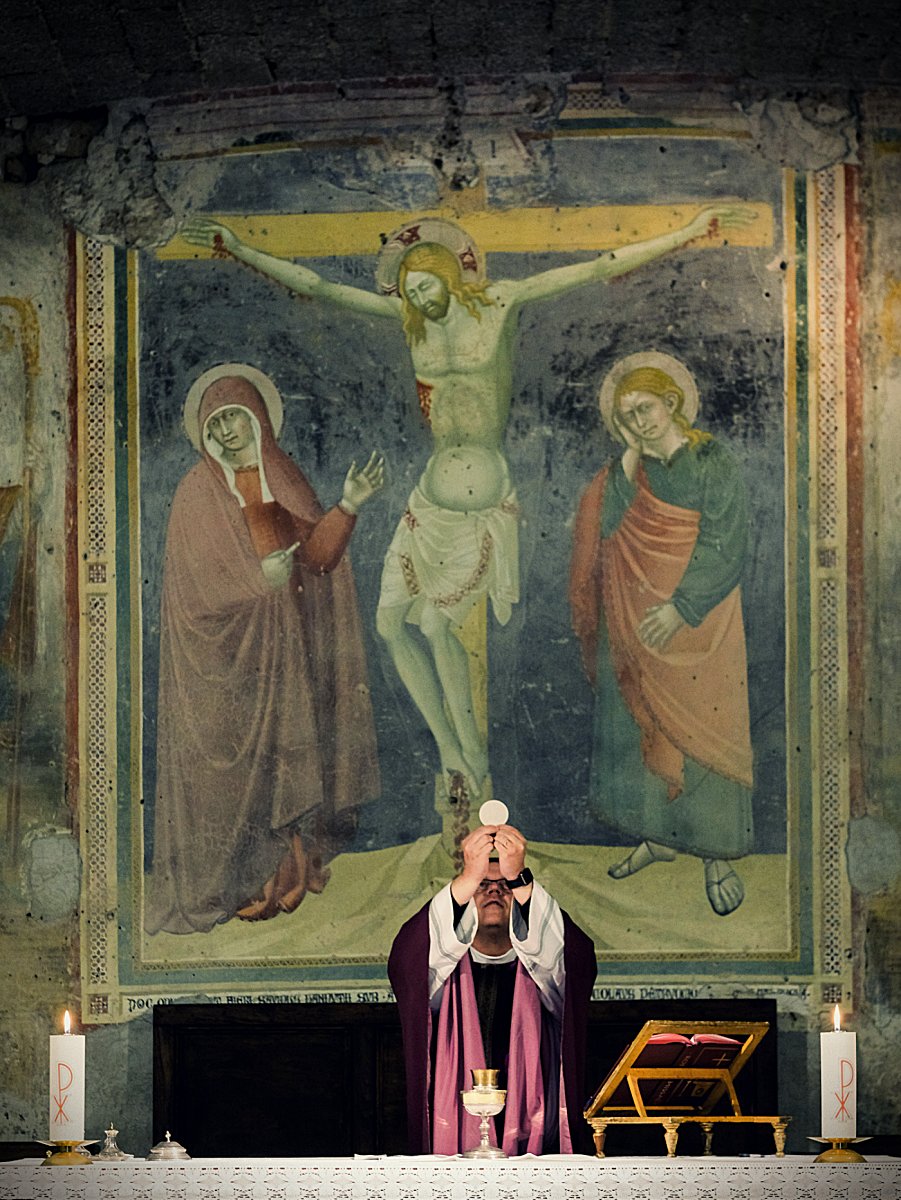
In my dialogue with Protestants this past week, the inevitable question of the Catholic Mass arose. One reader’s objections are essentially threefold:
• that the bread and wine that Catholic priests consecrate is not the Body and Blood of Christ, what we call the Eucharist;
• that Jesus died once and for all and that we Catholics are crucifying Jesus all over again;
• and that therefore, the Mass is not necessary for salvation.
If this Protestant reader is right, then Catholicism will utterly collapse. For the Church teaches:
The Eucharist is “the source and summit of the Christian life.” “The other sacraments, and indeed all ecclesiastical ministries and works of the apostolate, are bound up with the Eucharist and are oriented toward it. For in the blessed Eucharist is contained the whole spiritual good of the Church, namely Christ himself, our Pasch.” —Catechism of the Catholic Church, n. 1324
Since Protestants rely upon the doctrine of Sola Scriptura and the belief that Scripture alone is the infallible source of doctrine,[1]cf. What is the Pillar of Truth? I will start with the Bible and then conclude with how the Early Church understood and practiced these beliefs, showing they weren’t invented by some pope over a cup of tea.
My Flesh to Eat
In the Gospel of John, the day after Jesus had fed thousands through the multiplication of loaves and then walked on water, He turned to them and said:
Do not work for food that perishes but for the food that endures for eternal life, which the Son of Man will give you… (John 6:27)
And then He said:
…the bread of God is that which comes down from heaven and gives life to the world.” So they said to him, “Sir, give us this bread always.” Jesus said to them, “I am the bread of life…”(John 6:32-34)
Ah, what a lovely metaphor, what a superb symbol, right?! At least they thought it was—until Jesus shocked their senses with the following 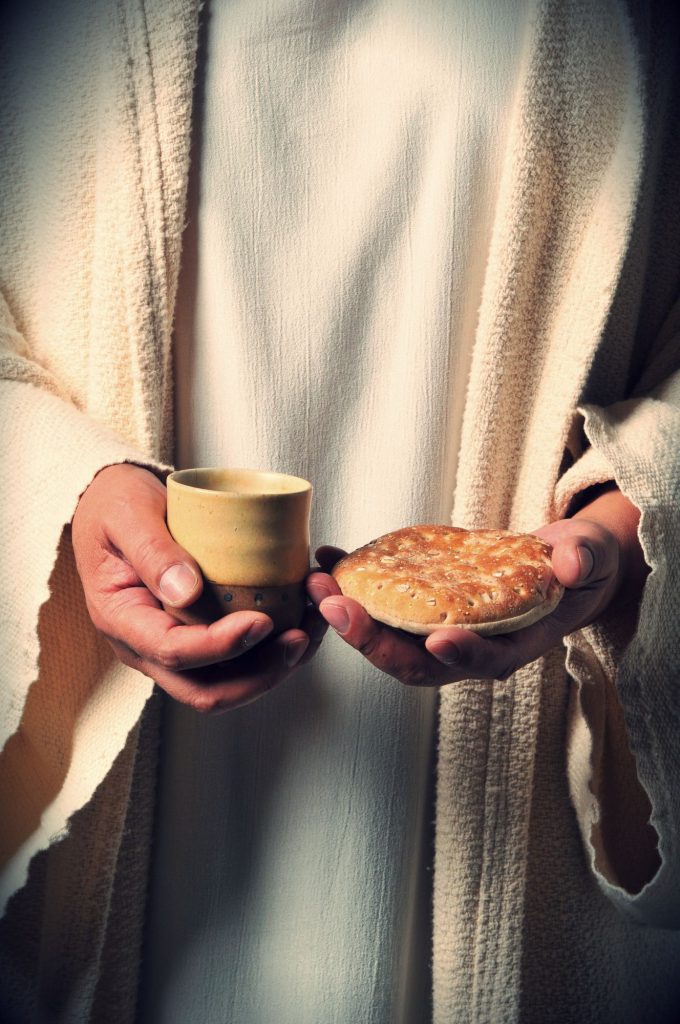 words.
The bread that I will give is my flesh for the life of the world. (v. 51)
Wait a minute. “How can this man give us His flesh to eat?”, they asked among themselves. Was Jesus implying a new religion of… cannibalism? No, He wasn’t. But His next words hardly set them at ease.
Whoever eats my flesh and drinks my blood has eternal life, and I will raise him on the last day. (v. 54)
The Greek word used here, τρώγων (trōgō), literally means to “gnaw or chew.” And if that wasn’t enough to convince them of His literal intentions, He continued:
For my flesh is true food, and my blood is true drink. (v. 55)
Read that again. His flesh is ἀληθῶς, or “truly” food; His blood is ἀληθῶς, or “truly” drink. And so He continued…
…the one who feeds on me will have life because of me. (v. 57)
τρώγων or trōgōn—literally means “feeds.” Not surprisingly, His own apostles finally protested: “This saying is hard.” Others, not in His inner circle, didn’t wait around for a reply.
As a result of this, many [of] His disciples returned to their former way of life and no longer accompanied Him. (John 6:66)
But how on earth could His followers “eat” and “feed” on Him?
Our Daily Sacrifice
The answer to this mystery that must have endlessly troubled His disciples came on the night that He was betrayed. In the Upper Room, Jesus looked into the eyes of His Apostles and said,
I have eagerly desired to eat this Passover with you before I suffer… (Luke 22:15)
Those were loaded words because we know that during Passover in the Old Testament, the Israelites ate a lamb and marked their doorposts with its blood. In this way, they were saved from the angel of death, the Destroyer who “passed over” the Egyptians. But it was not just any lamb…
…it shall be a lamb without blemish, a male… (Exodus 12:5)
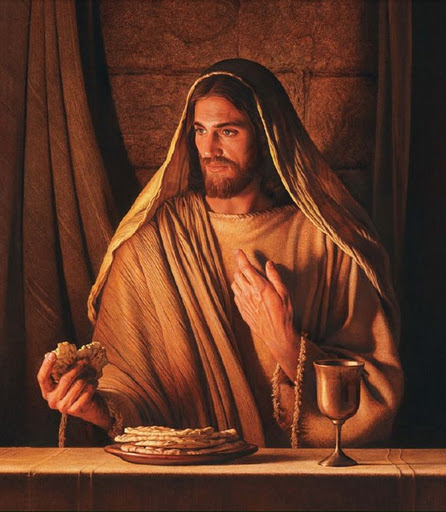 Now, at the Last Supper, Jesus takes the place of the lamb, thereby fulfilling the prophetic announcement of John the Baptist three years earlier…
Behold, the Lamb of God, who takes away the sin of the world. (John 1:29)
…a Lamb who will save people from eternal death—an unblemished Lamb:
For we do not have a high priest who is unable to sympathize with our weaknesses, but one who has similarly been tested in every way, yet without sin. (Heb 4:15)
Worthy is the Lamb that was slain. (Rev 5:12)
Now, most notably, the Israelites were to commemorate this Passover with the Feast of Unleavened Bread. Moses called it a zikrôwn or a “memorial” [2]cf. Exodus 12:14. And so, at the Last Supper, Jesus…
…took the bread, said the blessing, broke it, and gave it to them, saying, “This is My body, which will be given for you; do this in memory of Me.” (Luke 22:19)
This was the new memorial. The Lamb now offers Himself in the species of unleavened bread. But a memorial of what?
Then He took a cup, gave thanks, and gave it to them, saying, “Drink from it, all of you, for this is My blood of the covenant, which will be shed on behalf of many for the forgiveness of sins.” (Matt 26:27-28)
Here, we see that the memorial Supper of the Lamb is intrinsically linked to the Cross. It is a memorial of His Passion, Death, and Resurrection, which was about to take place.
For our paschal lamb, Christ, has been sacrificed… he entered once for all into the sanctuary, not with the blood of goats and calves but with His own blood, thus obtaining eternal redemption. (1 Cor 5:7; Heb 9:12)
St. Cyprian called the Eucharist “The Sacrament of the Sacrifice of the Lord.” Thus, whenever we “remember” Christ’s sacrifice in the way that He taught us — “do this in memory of me” — we are making present again in an unbloody way the bloody Sacrifice of Christ on the Cross, who died once and for all:
For as often as you eat this bread and drink the cup, you proclaim the death of the Lord until he comes. (1 Corinthians 11:26)
So, dear Protestant, Catholics are not recrucifying Jesus all over again. Rather, through the priesthood Christ established, we are making present on earth the “single sacrifice for sins” (Heb 10:11) that Jesus made “once for all” (Heb 10:10). We do not do this once, but St. Paul says “as often” as we eat this Bread and drink this Cup. How often? Jesus taught us to pray for our “daily bread” in the Our Father (Matt 6:11), and so in thousands of Masses around the earth each day, the Catholic faithful are able to do just that.
The Bread of Life — Eternal Life
My Protestant reader protests that the Mass, and by default, the Eucharist, is not necessary for salvation. Once again, it is Jesus who reveals the reality and necessity of the Holy Eucharist.
The Israelites called the unleavened bread for Passover “the bread of affliction.” [3]Deut 16:3 But, under the New Covenant, Jesus calls It “the bread of life.” The reason is this: through His Passion, Death, and Resurrection — through His affliction — Jesus’ Blood makes everlasting atonement for the sins of the world — He literally brings life. This was foreshadowed under the Old Law when the Lord told Moses…
…since the life of the flesh is in the blood… I have given it to you to make atonement on the altar for yourselves, because it is the blood as life that makes atonement. (Leviticus 17:11)
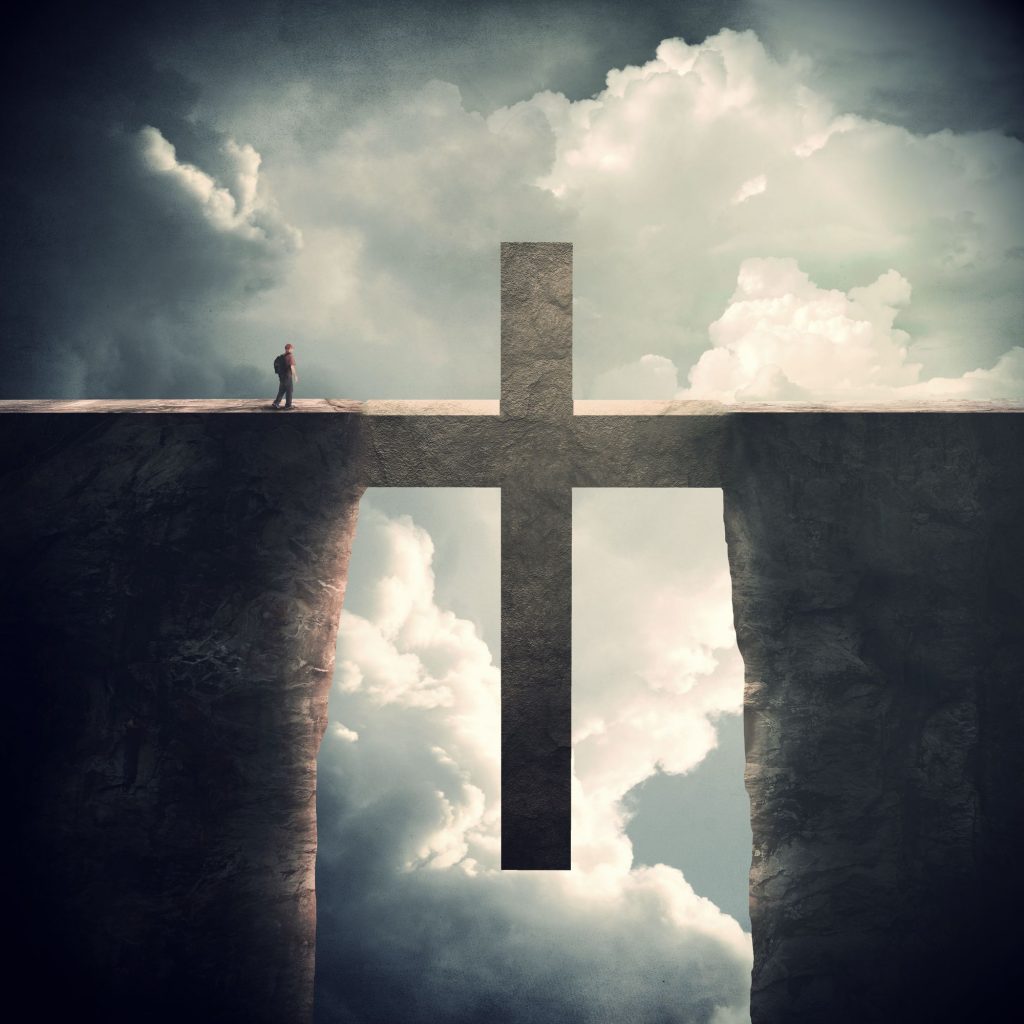
All the animal sacrifices that acted as ceremonial purifications,[4]cf. Heb 10:1 the unleavened bread they ate, the Passover lamb… were but symbols and shadows of the real transformation that would come through the Blood of Jesus — the “blood of God” — who alone can take away sin and its spiritual consequences. So Jesus has become the…
…new and living way which he opened for us through the curtain, that is, through his flesh… For if the sprinkling of defiled persons with the blood of goats and bulls and with the ashes of a heifer sanctifies for the purification of the flesh, how much more shall the blood of Christ, who through the eternal Spirit offered himself without blemish to God, purify your conscience from dead works to serve the living God. Therefore he is the mediator of a new covenant, so that those who are called may receive the promised eternal inheritance. (Heb 10:20; 9:13-15)
How do we receive this eternal inheritance? Jesus was clear:
Whoever eats my flesh and drinks my blood has eternal life, and I will raise him on the last day. (John 6:54)
If you are not taking part in the memorial of His Passion that Jesus commanded us to do, and St. Paul affirmed to the Corinthians, then why not?
For I received from the Lord what I also handed on to you, that the Lord Jesus, on the night he was handed over, took bread, and, after he had given thanks, broke it and said, “This is my body that is for you. Do this in remembrance of me.” In the same way also the cup, after supper, saying, “This cup is the new covenant in my blood. Do this, as often as you drink it, in remembrance of me.” (1 Cor 11:23-25)
His Real Presence
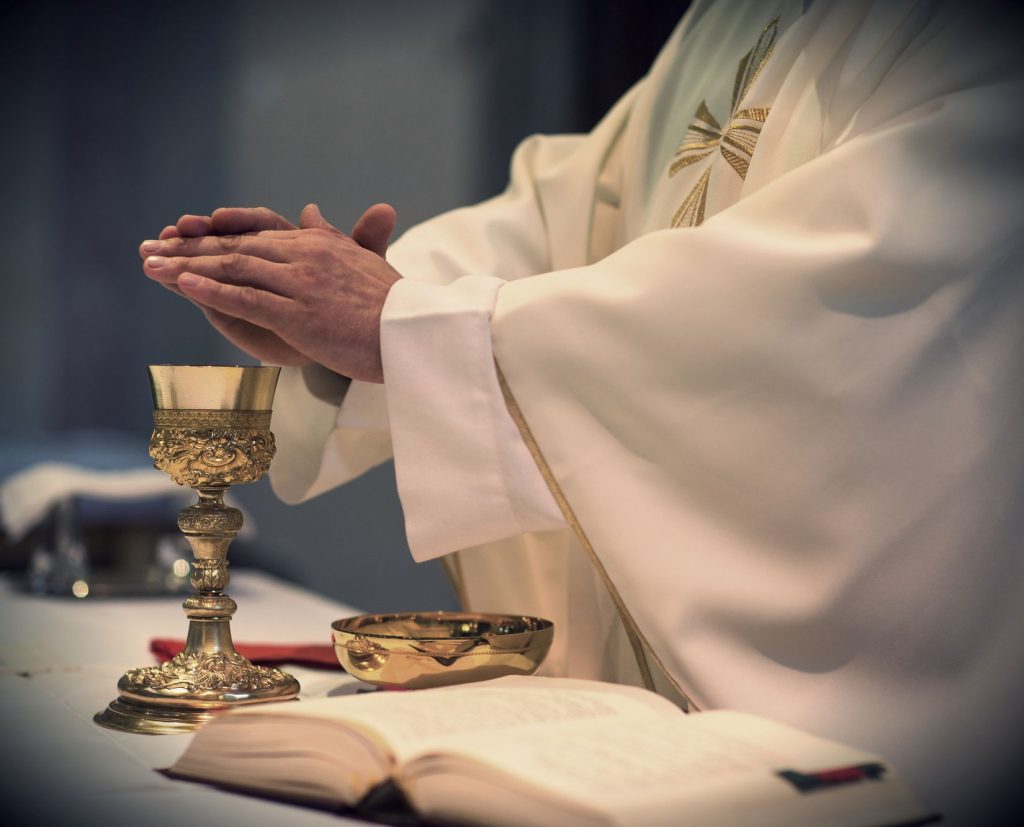
One cannot leave this subject without affirming that the Bread we eat and the Blood we drink at Mass is truly Christ Himself. Those were His words, and the Church has never departed from them.
Whenever we repeat Christ’s actions in the Mass through the ordained priesthood, Jesus becomes fully present to us, “Body, Blood, soul, and divinity” under the species of bread of wine.
The cup of blessing that we bless, is it not a participation in the blood of Christ? The bread that we break, is it not a participation in the body of Christ? (1 Cor 10:16)
The Council of Trent would affirm this reality some 1500 years later:
Because Christ our Redeemer said that it was truly His body that He was offering under the species of bread, it has always been the conviction of the Church of God, and this holy Council now declares again, that by the consecration of the bread and wine there takes place a change of the whole substance of the bread into the substance of the body of Christ our Lord and of the whole substance of the wine into the substance of His blood. This change the holy Catholic Church has fittingly and properly called “transubstantiation.” —Council of Trent, 1551; CCC n. 1376
And thus is literally fulfilled the promise of Jesus, He made to us before His Ascension into Heaven:
Behold, I am with you always, until the end of the age. (Matt 28:20)
He meant it literally.
- …He wanted to leave to His beloved spouse the Church a visible sacrifice (as the nature of man demands) by which the bloody sacrifice which He was to accomplish once for all on the cross would be re-presented, its memory perpetuated until the end of the world, and its salutary power be applied to the forgiveness of the sins we daily commit. —Council of Trent, n. 1562
This was believed and practiced from the very beginning of the Church after Pentecost (Acts 2:42), and was confirmed repeatedly by the Early Church Fathers. Keep in mind, the statements of belief below were made within decades of the Gospel of John being completed around 100 A.D…
St. Ignatius of Antioch (c. 110 A.D.)
I have no taste for corruptible food nor for the pleasures of this life. I desire the Bread of God, which is the flesh of Jesus Christ… —Letter to the Romans, 7:3
They [i.e. the Gnostics] abstain from the Eucharist and from prayer, because they do not confess that the Eucharist is the flesh of our Saviour Jesus Christ, flesh which suffered for our sins and which the Father, in his goodness, raised up again. —Letter to Smyrnians, 7:1
St. Justin Martyr (c. 100-165 A.D.)
…as we have been taught, the food which has been made into the Eucharist by the Eucharistic prayer set down by Him, and by the change of which our blood and flesh is nourished, is both the flesh and blood of that incarnated Jesus. —First Apology, 66
St. Irenaeus of Lyons (c. 140 – 202 A.D.)
He has declared the cup, a part of creation, to be His own Blood, from which He causes our blood to flow; and the bread, a part of creation, He has established as His own Body, from which He gives increase to our bodies… the Eucharist, which is the Body and Blood of Christ. —Against Heresies, 5:2:2-3
Origen (c. 185 – 254 A.D.)
You see how the altars are no longer sprinkled with the blood of oxen, but consecrated by the Precious Blood of Christ. —Homilies on Joshua, 2:1
…now, however, in full view, there is the true food, the flesh of the Word of God, as He Himself says: “My flesh is truly food, and My blood is truly drink. —Homilies on Numbers, 7:2
St. Cyprian of Carthage (c. 200 – 258 A.D.)
He Himself warns us, saying, “Unless you eat of the flesh of the Son of Man and drink His blood, you shall not have life in you.” Therefore do we ask that our Bread, which is Christ, be given to us daily, so that we who abide and live in Christ may not withdraw from His sanctification and from His Body. —The Lord’s Prayer, 18
St. Ephraim (c. 306 – 373 A.D.)
Our Lord Jesus took in His hands what in the beginning was only bread; and He blessed it… He called the bread His living Body, and did Himself fill it with Himself and the Spirit… Do not now regard as bread that which I have given you; but take, eat this Bread [of life], and do not scatter the crumbs; for what I have called My Body, that it is indeed. One particle from its crumbs is able to sanctify thousands and thousands, and is sufficient to afford life to those who eat of it. Take, eat, entertaining no doubt of faith, because this is My Body, and whoever eats it in belief eats in it Fire and Spirit. But if any doubter eat of it, for him it will be only bread. And whoever eats in belief the Bread made holy in My name, if he be pure, he will be preserved in his purity; and if he be a sinner, he will be forgiven.” But if anyone despise it or reject it or treat it with ignominy, it may be taken as a certainty that he treats with ignominy the Son, who called it and actually made it to be His Body. —Homilies, 4:4; 4:6
“As you have seen Me do, do you also in My memory. Whenever you are gathered together in My name in Churches everywhere, do what I have done, in memory of Me. Eat My Body, and drink My Blood, a covenant new and old.” —Ibid., 4:6
St. Athanasius (c. 295 – 373 A.D.)
This bread and this wine, so long as the prayers and supplications have not taken place, remain simply what they are. But after the great prayers and holy supplications have been sent forth, the Word comes down into the bread and wine—and thus is His Body confected. —Sermon to the Newly Baptized, from Eutyches
Church Father Aphraates the Persian Sage (c. 280 – 345 A.D.):
After having spoken thus [“This is My body…This is My blood”], the Lord rose up from the place where He had made the Passover and had given His Body as food and His Blood as drink, and He went with His disciples to the place where He was to be arrested. But He ate of His own Body and drank of His own Blood, while He was pondering on the dead. With His own hands the Lord presented His own Body to be eaten, and before He was crucified He gave His blood as drink… —Treatises 12:6[5]St. Thomas Aquinas answers this question of Christ eating His own flesh and blood in The Summa Theologica (ST Q. 81.1). Article 1. Whether Christ received His own body and blood?
Objection 1. It seems that Christ did not receive His own body and blood, because nothing ought to be asserted of either Christ’s doings or sayings, which is not handed down by the authority of Sacred Scripture. But it is not narrated in the gospels that He ate His own body or drank His own blood. Therefore we must not assert this as a fact.
Objection 2. Further, nothing can be within itself except perchance by reason of its parts, for instance. as one part is in another, as is stated in Phys. iv. But what is eaten and drunk is in the eater and drinker. Therefore, since the entire Christ is under each species of the sacrament, it seems impossible for Him to have received this sacrament.
Objection 3. Further, the receiving of this sacrament is twofold, namely, spiritual and sacramental. But the spiritual was unsuitable for Christ, as He derived no benefit from the sacrament. and in consequence so was the sacramental, since it is imperfect without the spiritual, as was observed above (Question 80, Article 1). Consequently, in no way did Christ partake of this sacrament.
On the contrary, Jerome says (Ad Hedib., Ep. xxx), “The Lord Jesus Christ, Himself the guest and banquet, is both the partaker and what is eaten.”
I answer that, some have said that Christ during the supper gave His body and blood to His disciples, but did not partake of it Himself. But this seems improbable. Because Christ Himself was the first to fulfill what He required others to observe: hence He willed first to be baptized when imposing Baptism upon others: as we read in Acts 1:1: “Jesus began to do and to teach.” Hence He first of all took His own body and blood, and afterwards gave it to be taken by the disciples. And hence the gloss upon Ruth 3:7, “When he had eaten and drunk”, says: ‘Christ ate and drank at the supper, when He gave to the disciples the sacrament of His body and blood.’ Hence, ‘because the children partook [Vulgate: ‘are partakers’ (Hebrews 2:14)] of His flesh and blood, He also hath been partaker in the same.’”
Reply to Objection 1. We read in the Gospels how Christ “took the bread . . . and the chalice”; but it is not to be understood that He took them merely into His hands, as some say. but that He took them in the same way as He gave them to others to take. Hence when He said to the disciples, “Take ye and eat,” and again, “Take ye and drink,” it is to be understood that He Himself, in taking it, both ate and drank. Hence some have composed this rhyme:
‘The King at supper sits,
The twelve as guests He greets,
Clasping Himself in His hands,
The food Himself now eats.’
Reply to Objection 2. As was said above (Question 76, Article 5), Christ as contained under this sacrament stands in relation to place, not according to His own dimensions, but according to the dimensions of the sacramental species; so that Christ is Himself in every place where those species are. And because the species were able to be both in the hands and the mouth of Christ, the entire Christ could be in both His hands and mouth. Now this could not come to pass were His relation to place to be according to His proper dimensions.
Reply to Objection 3. As was stated above (79, 1, ad 2), the effect of this sacrament is not merely an increase of habitual grace, but furthermore a certain actual delectation of spiritual sweetness. But although grace was not increased in Christ through His receiving this sacrament, yet He had a certain spiritual delectation from the new institution of this sacrament. Hence He Himself said (Luke 22:15): “With desire I have desired to eat this Pasch with you,” which words Eusebius explains of the new mystery of the New Testament, which He gave to the disciples. And therefore He ate it both spiritually and sacramentally, inasmuch as He received His own body under the sacrament which sacrament of His own body He both understood and prepared; yet differently from others who partake of it both sacramentally and spiritually, for these receive an increase of grace, and they have need of the sacramental signs for perceiving its truth.
You nourished your people
with food of angels
and furnished them bread from heaven,
ready to hand, untoiled-for,
endowed with all delights and
conforming to every taste.
(Wisdom of Solomon 16:20)
Related Reading
The Eucharist, and the Final Hour of Mercy
Meeting Face to Face Part I and Part II
Miracles of the Eucharist, as compiled by St. Carlos Acutis: miracolieucaristici.org
So grateful for your prayers and support.
Thank you!

To journey with Mark in The Now Word,
click on the banner below to subscribe.
Your email will not be shared with anyone.

Now on Telegram. Click:

Follow Mark and the daily “signs of the times” on MeWe:

Follow Mark’s writings here:

Listen on the following:




Footnotes
| ↑1 | cf. What is the Pillar of Truth? |
|---|---|
| ↑2 | cf. Exodus 12:14 |
| ↑3 | Deut 16:3 |
| ↑4 | cf. Heb 10:1 |
| ↑5 | St. Thomas Aquinas answers this question of Christ eating His own flesh and blood in The Summa Theologica (ST Q. 81.1). Article 1. Whether Christ received His own body and blood?
Objection 1. It seems that Christ did not receive His own body and blood, because nothing ought to be asserted of either Christ’s doings or sayings, which is not handed down by the authority of Sacred Scripture. But it is not narrated in the gospels that He ate His own body or drank His own blood. Therefore we must not assert this as a fact. Objection 2. Further, nothing can be within itself except perchance by reason of its parts, for instance. as one part is in another, as is stated in Phys. iv. But what is eaten and drunk is in the eater and drinker. Therefore, since the entire Christ is under each species of the sacrament, it seems impossible for Him to have received this sacrament. Objection 3. Further, the receiving of this sacrament is twofold, namely, spiritual and sacramental. But the spiritual was unsuitable for Christ, as He derived no benefit from the sacrament. and in consequence so was the sacramental, since it is imperfect without the spiritual, as was observed above (Question 80, Article 1). Consequently, in no way did Christ partake of this sacrament. On the contrary, Jerome says (Ad Hedib., Ep. xxx), “The Lord Jesus Christ, Himself the guest and banquet, is both the partaker and what is eaten.” I answer that, some have said that Christ during the supper gave His body and blood to His disciples, but did not partake of it Himself. But this seems improbable. Because Christ Himself was the first to fulfill what He required others to observe: hence He willed first to be baptized when imposing Baptism upon others: as we read in Acts 1:1: “Jesus began to do and to teach.” Hence He first of all took His own body and blood, and afterwards gave it to be taken by the disciples. And hence the gloss upon Ruth 3:7, “When he had eaten and drunk”, says: ‘Christ ate and drank at the supper, when He gave to the disciples the sacrament of His body and blood.’ Hence, ‘because the children partook [Vulgate: ‘are partakers’ (Hebrews 2:14)] of His flesh and blood, He also hath been partaker in the same.’” Reply to Objection 1. We read in the Gospels how Christ “took the bread . . . and the chalice”; but it is not to be understood that He took them merely into His hands, as some say. but that He took them in the same way as He gave them to others to take. Hence when He said to the disciples, “Take ye and eat,” and again, “Take ye and drink,” it is to be understood that He Himself, in taking it, both ate and drank. Hence some have composed this rhyme: ‘The King at supper sits, Reply to Objection 2. As was said above (Question 76, Article 5), Christ as contained under this sacrament stands in relation to place, not according to His own dimensions, but according to the dimensions of the sacramental species; so that Christ is Himself in every place where those species are. And because the species were able to be both in the hands and the mouth of Christ, the entire Christ could be in both His hands and mouth. Now this could not come to pass were His relation to place to be according to His proper dimensions. Reply to Objection 3. As was stated above (79, 1, ad 2), the effect of this sacrament is not merely an increase of habitual grace, but furthermore a certain actual delectation of spiritual sweetness. But although grace was not increased in Christ through His receiving this sacrament, yet He had a certain spiritual delectation from the new institution of this sacrament. Hence He Himself said (Luke 22:15): “With desire I have desired to eat this Pasch with you,” which words Eusebius explains of the new mystery of the New Testament, which He gave to the disciples. And therefore He ate it both spiritually and sacramentally, inasmuch as He received His own body under the sacrament which sacrament of His own body He both understood and prepared; yet differently from others who partake of it both sacramentally and spiritually, for these receive an increase of grace, and they have need of the sacramental signs for perceiving its truth. |