

or on YouTube
I turned the corner of the meat aisle in the grocery store. A young man in his early twenties stood there motionless, staring blankly through the glass freezer door at the boxes of hamburgers. The cheapest was about $26 for just six patties (a ridiculous price, given that our province, Alberta, is a major beef producer). Suddenly, as though waking from a stupor, the young man slowly opened another door, grabbed a box of cheap, processed sausage rolls at about a third of the cost, and strode off.
I felt so sad for him, for his generation… the generation of my own children. The cost of living has become daunting, whether it’s the price of fuel at the pump, the cost of an education, or the distant dream of owning a basic house. Another young man I know, who is hoping to marry soon, said he’s having a hard time just finding basic work because “immigrants are having their salaries subsidized by the government, so they’re getting the jobs.”
 Add to that the daily headlines predicting prolonged war, new pandemics, food shortages, mass layoffs due to “artificial intelligence,” and the ceaseless promotion of a “culture of death”: contraception, abortion, gender ideology, pornography, and assisted suicide. Collectively, this is a colossal trampling upon the value and dignity of every human life, created in the “image of God.”[1]In the era of artificial intelligence, when human dignity is threatened by new forms of dehumanization, ours is the pressing duty to remain profoundly human. We must lovingly safeguard the grandeur of humanity bestowed upon us and revealed in its fullness in Christ, the splendor of which no machine can ever replace.” —POPE LEO XIV, Encyclical Magnifica Humanus, n. 15 As John Paul II said:
Whoever attacks human life, in some way attacks God himself. —POPE JOHN PAUL II, Evangelium Vitae; n. 10
We are witnessing the final stages of this rebellion against God that formally launched in Russia in 1917. It was the revolutionary Vladimir Lenin who stated the goal of this communist revolution — and it wasn’t just Russia.
I spit on Russia! That’s only one stage we have to pass through on our way to world revolution. We are going to tear the whole thing down. We shall destroy and smash everything… nothing will remain standing. —from The Life and Death of Lenin, p. 418-419; cf. The Twilight of Marxism, Thomas W. Petrisko, p. 103
Indeed, Pope Pius XI said:
Russia [was considered] the best-prepared field for experimenting with a plan elaborated decades ago, and who from there continue to spread it from one end of the world to the other. —POPE PIUS XI, Divini Redemptoris, n. 24; www.vatican.va
Carrying on Lenin’s vision to annihilate the present order, today’s global leaders are rebranding this revolution the “Great Reset,” promising to “build back better.” Sounds lovely, doesn’t it? But it’s just as demonic, just as antihuman as Lenin envisioned.[2]cf. Fatima and the Unhumans It is, in fact, the reason God sent Our Lady into the world as a final remedy. The “errors of Russia”, as she put it at Fatima, would spread to the nations, just as Lenin predicted, if we did not listen to her. And we didn’t. As Our Lady said to Italian mystic, Blessed Elena Aiello:
People are offending God too much. Were I to show you all the sins committed on a single day, you would surely die of grief. These are grave times. The world is thoroughly upset because it is in a worse condition than at the time of the deluge. Materialism marches on ever fomenting bloody strifes and fratricidal struggles. Clear signs portend that peace is in danger. That scourge, like the shadow of a dark cloud, is now moving across mankind: only my power, as Mother of God, is preventing the outbreak of the Storm. All is hanging on a slender thread. When that thread shall snap, Divine Justice shall pounce upon the world and execute its dreadful, purging designs. All the nations shall be punished because sins, like a muddy river, are now covering all the earth. The powers of evil are getting ready to strike furiously in every part of the globe. Tragic events are in store for the future. For quite a while, and in many a way, I have warned the world. The nation’s rulers do indeed understand the gravity of these dangers, but they refuse to acknowledge that it is necessary for all people to practice a truly Christian life to counteract that scourge. Oh, what torture I feel in my heart, on beholding mankind so engrossed in all kinds of things and completely ignoring the most important duty of their reconciliation with God. —Virgin Mary to Blessed Elena Aiello, www.mysticsofthechurch.com
The Watchman’s Wail
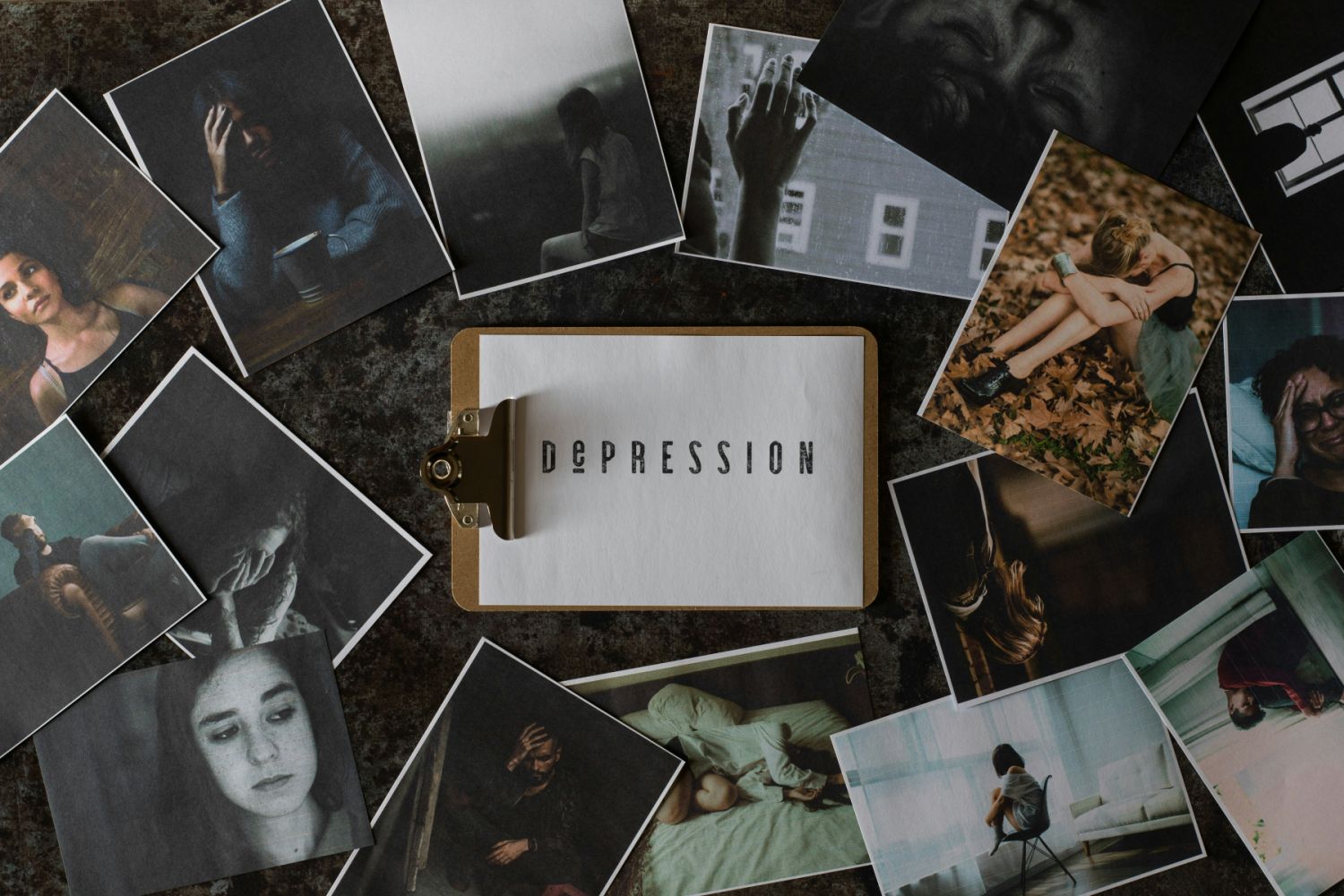
“Oh, what torture I feel in my heart”, she said. Yes, this is what I have felt of late, too, even a certain depression as we watch the collapse of civility and the love of many growing cold. I understand now why so many of the Old Testament prophets felt so deeply discouraged. The louder they shouted, the more often they were ignored — if not outright stoned. Hence, the prophet Jeremiah dreamed of simply running away to live out the rest of his days in the wilderness:
Whenever I speak, I must cry out, violence and outrage I proclaim… Oh, that I had in the wilderness a travelers’ lodging! That I might leave my people and depart from them. They are all adulterers, a band of traitors. (Jeremiah 9:1, Jeremiah 20:8)
 Habbukuk lamented how the wicked and corrupt seemed to get away with everything:
Why do you let me see iniquity? Why do you simply gaze at evil? Destruction and violence are before me; there is strife and discord. This is why the law is numb and justice never comes, for the wicked surround the just… (Habakkuk 1:3-4)
Jonah preferred to be thrown into the sea rather than prophesy to the Ninevites, while Elijah fled into the desert to die, fed up with himself as much as everyone else.
Enough, LORD! Take my life, for I am no better than my ancestors. (1 Kings 19:4)
In fact, we would not be human if we didn’t feel sadness and pain at the current state of humanity. But what we have to guard against is hopelessness.
The Valley of the Shadow of Death
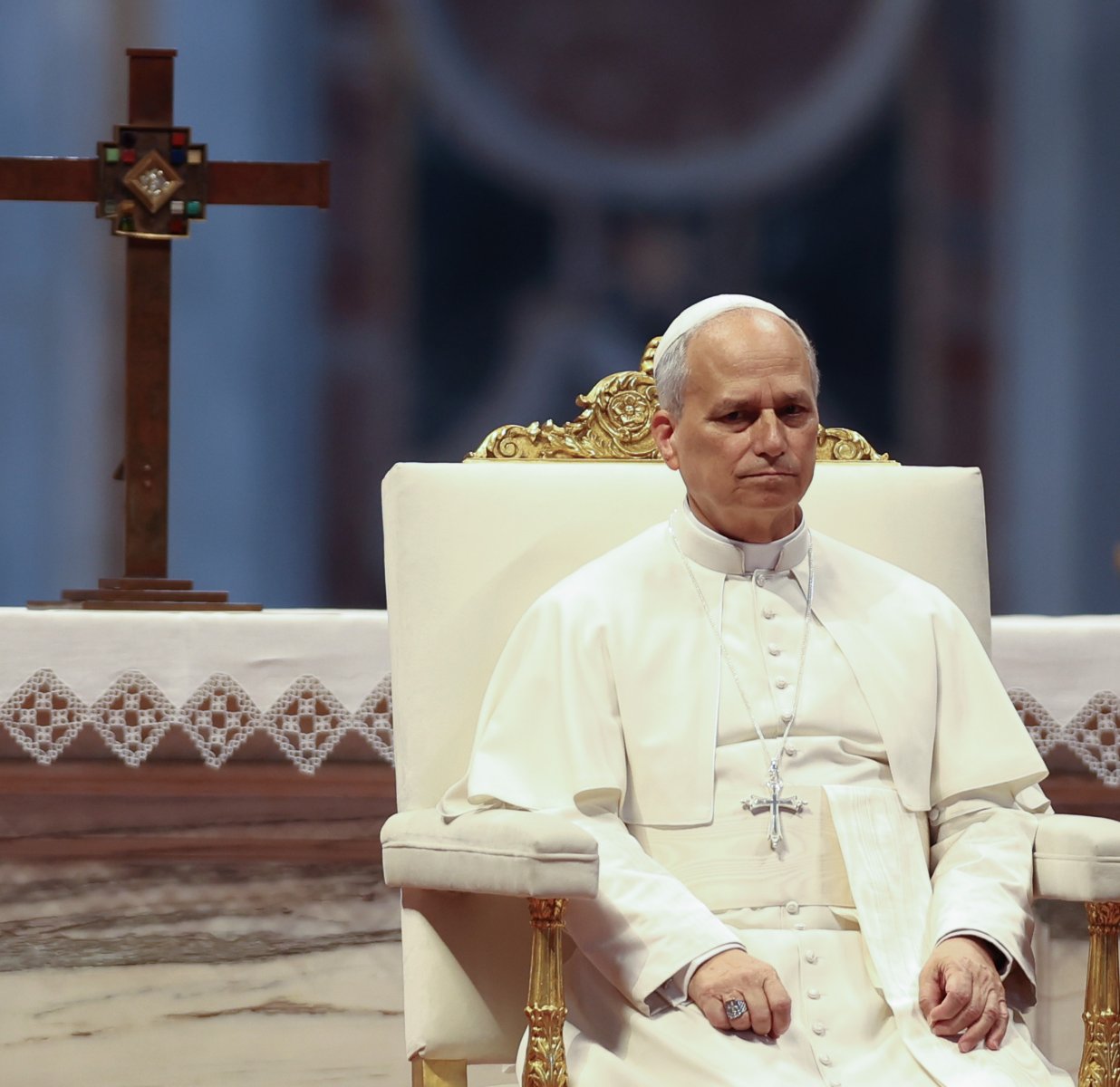 From a purely human perspective, there is little hope for a truly human and free future.[3]cf. The Spectre of Global Communism and The Final Revolution As Pope Leo XIV warned, human beings are increasingly treated as “mere cogs in a system driven toward ever greater efficiency.”[4]Magnifica Humanus, n. 92
At the same time he issued that warning in his new encyclical,[5]Magnifica Humanus “On Safeguarding the Human Person in the Time of Artificial Intelligence” it was revealed that tech giants are now engaged in “the ideological pursuit of the machine god.”[6]slaynews.com, May 26, 2026
I ask everyone to abandon the construction of yet another Tower of Babel and to join forces in building up the common good, so that humanity will never lose its beauty, and the world once again will come to recognize the human heart as the place where God desires to dwell. —POPE LEO XIV, Magnifica Humanus “On Safeguarding the Human Person in the Time of Artificial Intelligence,” n. 16
We are walking, as it were, in the “valley of the shadow of death”, and thus, being called to increasingly walk “by faith, not by sight” (2 Cor 5:7). But how do we reach the point where we can say, with the Psalmist:
Even though I walk through the valley of the shadow of death, I will fear no evil, for you are with me, your rod and your staff comfort me. (Psalms 23:4)
Like that young man standing in front of that meat freezer, many of us have become paralyzed by fear… even hopelessness.
Hope in Hopelessness
The Rod
Notice that both the rod and the staff of the Good Shepherd “comfort”, or you could say, give hope. The rod is several feet long, usually a meaty stick. It is used as both a defensive weapon against predators and to correct wayward sheep by throwing it at the ground near their feet to startle and awaken them, drawing them back to the herd.
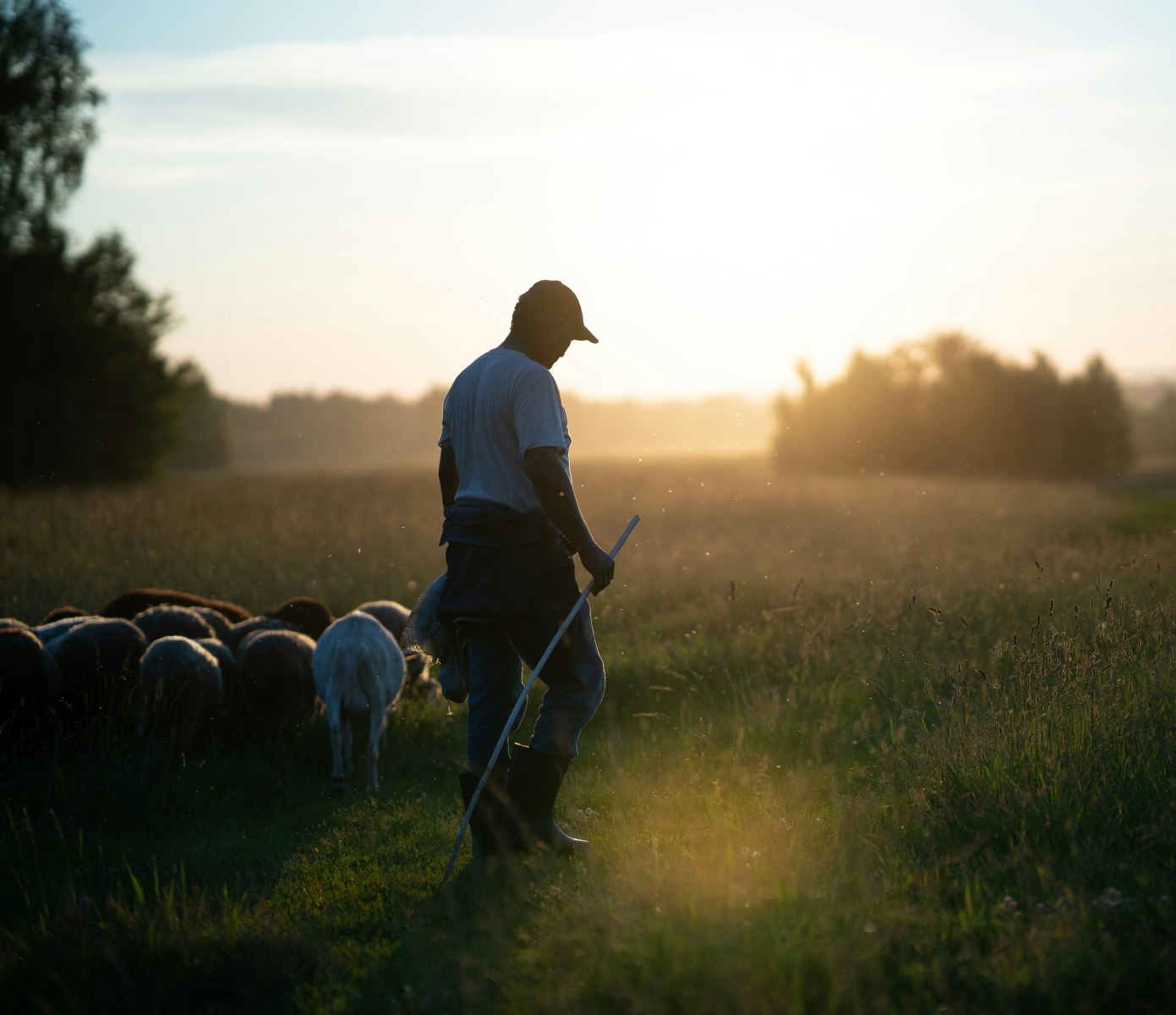 On the other hand, the long staff with the hook on the end is used to gently move or separate sheep, rescue a lamb from water or briars, and so forth.
In the past century and a half, God has used our popes as a rod to both protect and correct the flock of Christ (eg. see Why Aren’t the Popes Shouting?). How is this comforting? Through the prophetic voice of the Magisterium, the plans of the enemy have been exposed, and the remedy thrown at our feet, so to speak, to awaken us and draw us back to the Good Shepherd. This, in itself, is hope because it tells us that God isn’t being taken by surprise, He’s not in a defensive posture at the growing evil in our times. As Jesus said,
I have told you this before it happens, so that when it happens you may believe. (John 14:29)
Benedict XVI put it another way:
It is important to know that I can always continue to hope, even if in my own life, or the historical period in which I am living, there seems to be nothing left to hope for. Only the great certitude of hope that my own life and history in general, despite all failures, are held firm by the indestructible power of Love, and that this gives them their meaning and importance, only this kind of hope can then give the courage to act and to persevere. —Spe Salvi “On Christian Hope”, n. 35
I have lost count of the number of people who have told me that, even though there are some frightening truths in my writings, they have always left with a sense of peace. That’s a good sign… a sign of the rod that produces hope, even if it comes in the form of a “wake-up call.” Truth, even the hard truth, is always a refraction of light from He who is Truth itself, and so it always bears the divine seed of hope.
The Staff
There is no question that the gentle staff that the Lord has sent us in these times has come in the form of a “woman clothed in the sun” (Rev 12:1-2), yes, a mother.
 In the face of the culture of death and the impending explosion of the global technological revolution we are now living through, Our Lady appeared to six children in the communist country of Yugoslavia in 1981. That was the same year IBM’s personal computer was unveiled. Her first message for the world was to the point:
I have come to tell you that God exists. —Our Lady of Medjugorje, 1981 [7]Denis Nolan, Medjugorje: A Time for Truth, a Time for Action, 1
Shortly after her appearances began, signs of His existence followed in her wake: countless conversions, hundreds of vocations to the priesthood, thousands of new ministries and apostolates, and innumerable physical and spiritual miracles.[8]cf. Medjugorje and Hair-Splitting Our Lady’s counsel was simple, but absolutely life-transforming:
- Read the Scriptures every day
- Monthly Confession
- Fasting (on bread and water on Wednesdays and Fridays)
- Prayer from the heart (ie. a personal relationship with Jesus)
- Frequent reception of the Eucharist
By living these five foundational aspects of our Catholic Faith, hope would be borne anew in the heart — not as an emotion but as the fruit of a relationship where you come to realize, for yourself, that “God exists.”
Being Christian is not the result of an ethical choice or a lofty idea, but the encounter with an event, a person, which gives life a new horizon and a decisive direction. —POPE BENEDICT XVI; Encyclical Letter, Deus Caritas Est, “God is Love”, n. 1
Hope through the Cross
Still, after the initial encounter with Christ, you may find that your prayer has become dry or that present trials are too overwhelming, and hope begins to dim. Yes, faithful Christians will experience the weight of the cross that tests not only our faith but our hope. Yet, “here is a call for the endurance of the saints” (Rev 14:12) — a call, frankly, to maturity.
We can try to limit suffering, to fight against it, but we cannot eliminate it. It is when we attempt to avoid suffering by withdrawing from anything that might involve hurt, when we try to spare ourselves the effort and pain of pursuing truth, love, and goodness, that we drift into a life of emptiness, in which there may be almost no pain, but the dark sensation of meaninglessness and abandonment is all the greater. It is not by sidestepping or fleeing from suffering that we are healed, but rather by our capacity for accepting it, maturing through it and finding meaning through union with Christ, who suffered with infinite love. —POPE BENEDICT XVI, Spe Salvi “On Christian Hope”, n. 35
 St. Paul said, “It is necessary for us to undergo many hardships to enter the kingdom of God,”[9]Acts 14:22 and that, “You need endurance to do the will of God and receive what he has promised.”[10]Hebrews 10:36-38 Put another way, authentic hope isn’t wishful thinking. Rather, it’s the fruit of the cross in your life if you but pick it up and follow Jesus. Had Our Lord only spoken of the Resurrection, hope would have remained a lovely idea. But through His Passion, Death, and literal Resurrection, hope, especially of eternal life, became the real deal.
And so, St. Paul actually maps out for us how authentic hope is cultivated in the heart in the midst of terrible trials:
…affliction produces endurance, and endurance, proven character, and proven character, hope, and hope does not disappoint, because the love of God has been poured out into our hearts through the Holy Spirit that has been given to us. (Romans 5:3-5)
Paul is simply saying that we, too, must lay down on whatever cross we have been given and persevere. Let it do its job of purifying our hearts. And if we do? We will discover not only that “God exists” all around me, or in Scripture, the confessional, or the Eucharist, but now, within me. This is not a hope that comes from “positive thinking” or mental gymnastics, but from allowing Jesus to rise within me as a real, living presence.
Whoever loves Me will keep My word, and My Father will love him, and We will come to him and make our dwelling with him… Blessed are the pure in heart, for they will see God… (John 14:23, Matt 5:8)
They will see Him within. And that is a hope that no trial, no demon, no persecutor can extinguish. Thus, Blessed Franz Jägerstätter, who died at the hands of the Nazis, rightly says:
Discipleship to Christ requires heroism. A weak and wavering personal character is good for nothing. —Blessed Franz Jägerstätter († 1943), Magnificat, May 23, 2026; Franz Jägerstätter: Letters and Writings from Prison (Orbis Books)
But are you weak? Then be weak in admitting that you need Christ; be weak in acknowledging your spiritual poverty; be weak in abandoning yourself to His Divine Will rather than trying to control everything and everyone around you. Instead, surrender it all to Jesus saying, “Lord, You take of everything.”[11]cf. Novena of Abandonment And He replies, good, for…
“My grace is sufficient for you, for power is made perfect in weakness.” I will rather boast most gladly of my weaknesses, in order that the power of Christ may dwell with me. Therefore, I am content with weaknesses, insults, hardships, persecutions, and constraints, for the sake of Christ; for when I am weak, then I am strong. (2 Corinthians 12:9-10)
Not only will this kind of holy abandonment help you to recover hope by giving God room to work in your trials, room to work His miracles, but you will even find joy beginning to return when you accept that His Divine Will, in whatever form it takes, is ultimately going to work for the good of both your soul and humanity, despite all appearances.
Hope in Community
Finally, one cannot speak of finding hope in hopelessness without addressing the need for Christian community. I think few of us even understand how truly powerful community is, which is why I call it the “eighth sacrament.” For Jesus said,
Where two or three are gathered together in My name, there am I in the midst of them. (Matt 18:20)
 How many times have I been downtrodden, beaten, depressed, and deeply in need of grace… only to have found it through other brothers and sisters in Christ. And this includes my own family.
Our Lady appeared to tell us that “God exists.” But the next thing she does is tell families and parishes to form small groups, cenacles, to pray together. The first thing the Apostles did after Pentecost was to form communities. It was for two reasons: mutual support through the exercise of the charisms…
Encourage one another and build one another up, as indeed you do. (1 Thessalonians 5:11)
…and secondly, to give evidence of the first:
This is how all will know that you are my disciples, if you have love for one another. (John 13:35)
…the Christian community will become a sign of God’s presence in the world. —Ad Gentes Divinitus, Vatican II, n.15
In summary, you will find hope in enduring your trials, which will shape within you a godly character, ultimately revealing that within you, “God exists”; you will find hope in community where “God exists” in the other; and lastly, the world will, in turn, discover that “God exists” by seeing our love for one another.
We should not imagine a special program that could provide a remedy for the current multi-faceted crisis. We have simply to live our Faith, completely and radically. The Christian virtues are the Faith blossoming in all the
human faculties. They mark the way for a happy life in harmony with God. We must create places where they can flourish. I call upon Christians to open oases of freedom in the midst the desert created by rampant profiteering. We must create places where the air is breathable, or simply where the Christian life is possible. Our communities must put God in the center. Amidst the avalanche of lies, we must be able to find places where truth is not only explained but experienced. In a word, we must live the Gospel: not merely thinking about it as a utopia, but living it in a concrete way. The Faith is like a fire, but it has to be burning in order to be transmitted to others. —Cardinal Sarah, Catholic Herald, April 5th, 2019
Form prayer groups and pray with perseverance. Man increasingly believes that he can do without God and he increasingly wants to replace God. —Our Lady to Angela, December 26, 2025
Christian friendships and prayer groups are so important. In them, you will find Christian support for your life; they are great pillars of prayer. —St. Pio to Manuela Strack, January 15, 2025
Related Reading
So grateful for your prayers and support.
Thank you!

To journey with Mark in The Now Word,
click on the banner below to subscribe.
Your email will not be shared with anyone.
Now on Telegram. Click:

Follow Mark and the daily “signs of the times” on MeWe:

Listen on the following:




Footnotes
| ↑1 | In the era of artificial intelligence, when human dignity is threatened by new forms of dehumanization, ours is the pressing duty to remain profoundly human. We must lovingly safeguard the grandeur of humanity bestowed upon us and revealed in its fullness in Christ, the splendor of which no machine can ever replace.” —POPE LEO XIV, Encyclical Magnifica Humanus, n. 15 |
|---|---|
| ↑2 | cf. Fatima and the Unhumans |
| ↑3 | cf. The Spectre of Global Communism and The Final Revolution |
| ↑4 | Magnifica Humanus, n. 92 |
| ↑5 | Magnifica Humanus “On Safeguarding the Human Person in the Time of Artificial Intelligence” |
| ↑6 | slaynews.com, May 26, 2026 |
| ↑7 | Denis Nolan, Medjugorje: A Time for Truth, a Time for Action, 1 |
| ↑8 | cf. Medjugorje and Hair-Splitting |
| ↑9 | Acts 14:22 |
| ↑10 | Hebrews 10:36-38 |
| ↑11 | cf. Novena of Abandonment |